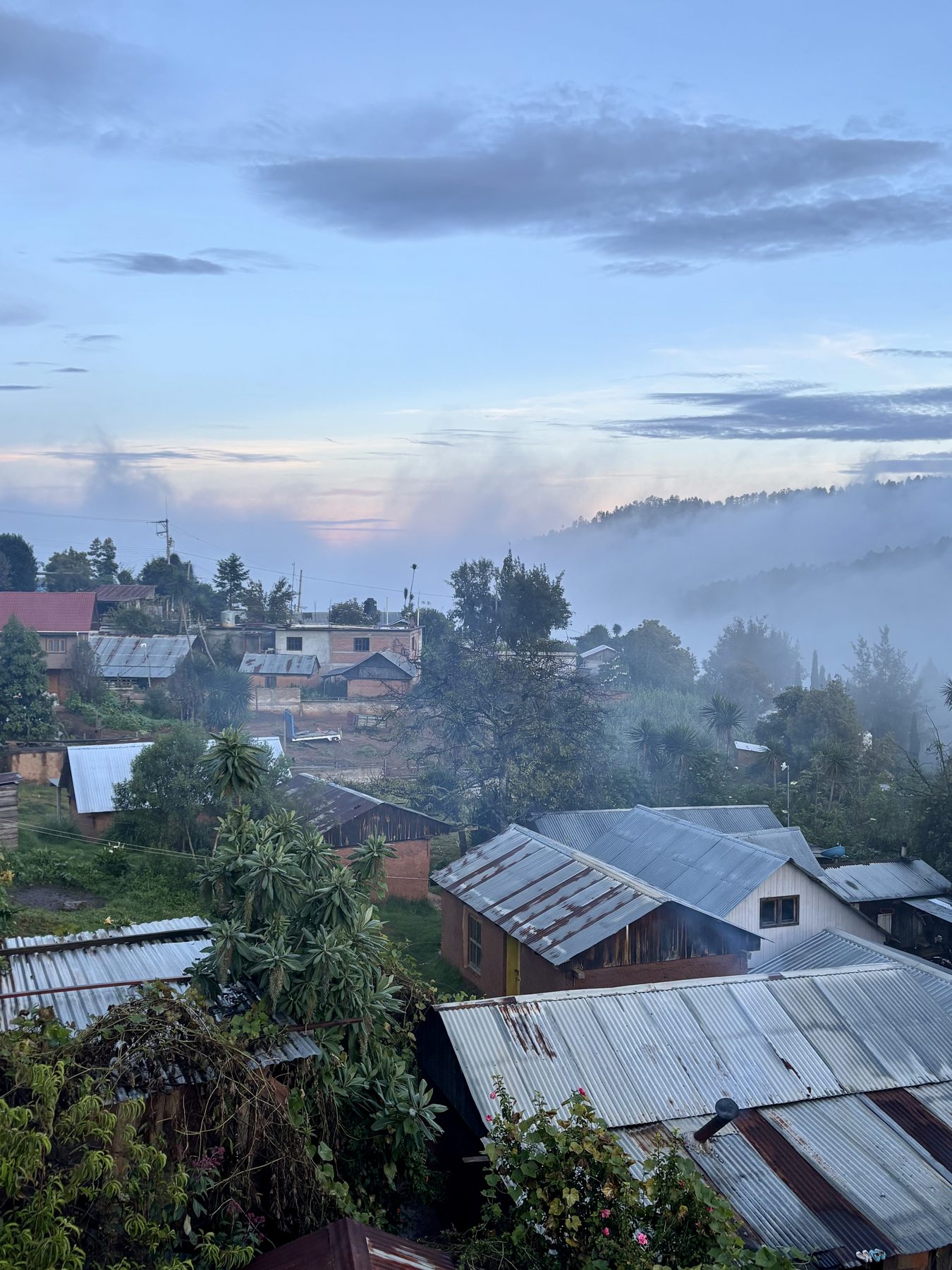
San Sebastián Río Hondo · Oaxaca, Mexico
Handspun, plant-dyed, woven slowly in the mountains.
Yaga begins in a village high in the mountains of Oaxaca, where cotton is still spun by hand. What follows is the story of that place, the women who weave there, and the cloth they make. Every piece carries that story.
San Sebastián Río Hondo sits high in the mountains of Oaxaca, surrounded by forest and cornfields. Through the rainy season the air is cold and wet. The homes are simply built, some of them still made from natural materials like adobe, and little passes through the village. There are few visitors and few easy sources of income. People here work hard and hold many roles at once. Resilience is part of daily life.
After school the children run between the houses and the maize, hunting chapulines in the cornfields. In the late afternoon the rain often clears, the sky turns a deep, washed blue, and the air goes fresh and clean.
The heart of Yaga is handspun organic cotton. The cotton is grown on the coast of Oaxaca. In the village it is deseeded, carded, and spun entirely by hand on a charkha, a simple spinning wheel. Spinning is the slowest and most demanding part of making cloth, and one of the very few places left in the world where it is still done this way, by hand, thread by thread.
The method arrived here through a project rooted in khadi, the handspun, handwoven cloth Gandhi championed during India's struggle for independence, as a way to free communities from their dependence on colonial textile mills. In San Sebastián Río Hondo, where much of the older spinning and weaving had been lost over generations, it took root as something new. It gave the village back a living textile practice, and a source of income that stays in local hands.
Each family keeps a spinning wheel at home. They spin through the quiet hours of the day, then carry the thread to the center of the village, where the cooperative is based. From there the thread is plant-dyed with local plants and woven on pedal looms by the weavers of the village. Some people spin, some weave, some dye, and some do all three.
Every step begins and ends with the land.
It was under the eye of Marcela, a spinner, weaver, and healer of San Sebastián Río Hondo, that Cat-Vi learned to spin, returning to her home almost every day. Spinning is a long apprenticeship in patience. The thread breaks and breaks again, until the hands learn the balance between holding and letting go.
 Plant-dyed cotton · Yaga
Some pieces in Yaga we created together with the weavers. Others were already woven when we arrived, and were chosen with care. Because the cloth is handspun from the cotton up and plant-dyed, every piece holds an extraordinary amount of time and skill, and a softness that is difficult to put into words.
The collection includes ponchos, shawls, scarves, shirts, and trousers. The colors are vibrant and earthy at once, drawn entirely from plants. Each piece is one of a kind, or made in very small numbers.
These pieces are delicate. The handspun thread is fine, and the cloth can snag or tear if it is not handled gently. We see this not as a flaw but as part of what Yaga offers. To wear it is a quiet invitation to slow down, to move with more care, and to stay present with your body and your surroundings. Worn this way, the garment becomes a small daily practice in mindfulness.
The colors live too. Because the dyes come from plants, they shift gently over time, softening with light and wear. This is not fading but life: like anything alive, these garments change with time, and carry it with them.
Almost every piece is one of a kind. Sold pieces remain visible as Archive.
When you choose a piece from Yaga, your support reaches the spinners, weavers, and dyers of San Sebastián Río Hondo directly, and it helps keep a living textile culture alive. These are not only clothes. They carry the stories of the people and the place that made them, and to wear one is to let that story continue.
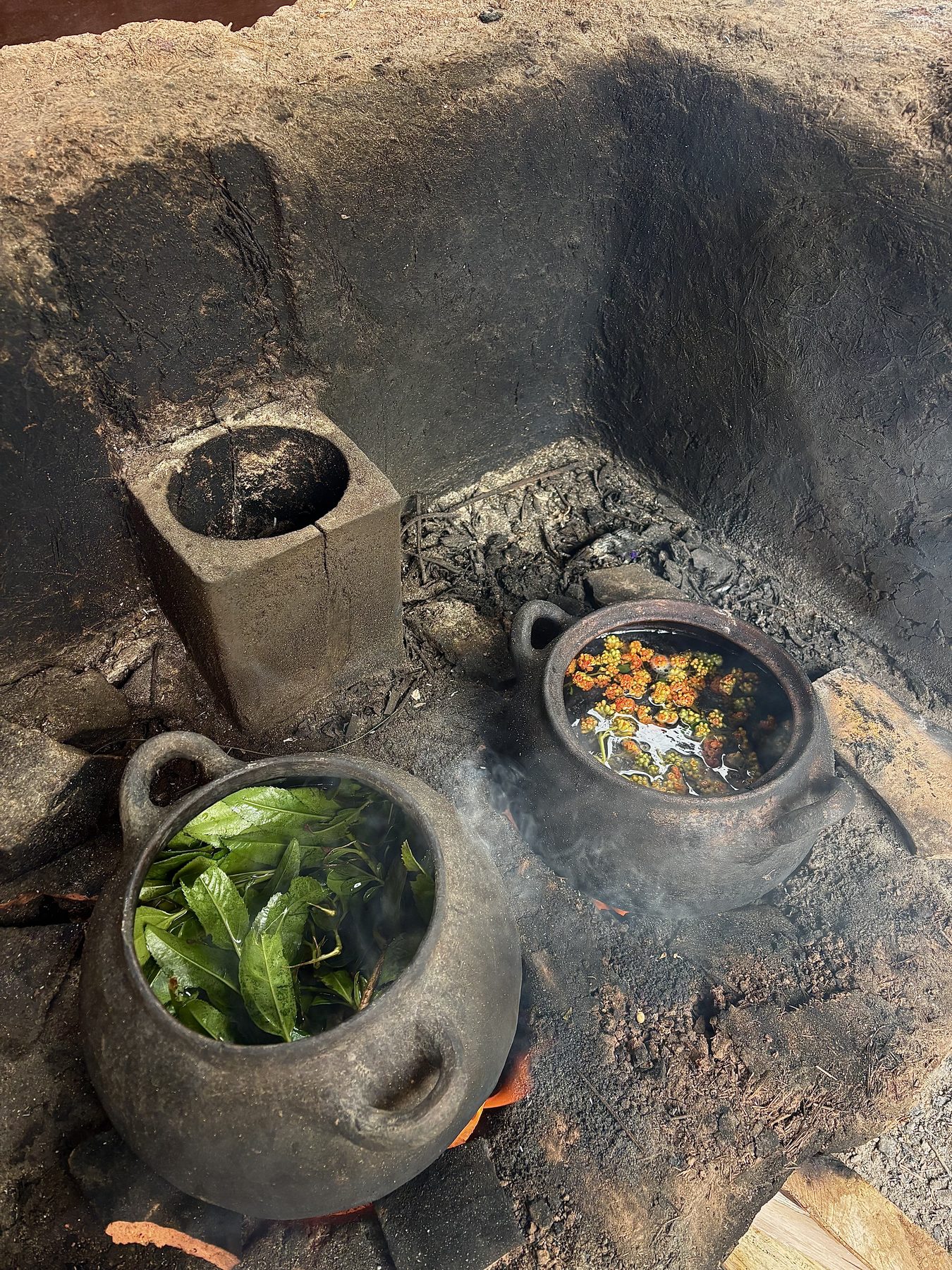
In Zapotec, yaga means the plant realm. We chose it because everything in this collection comes from plants. The cotton, the dyes, the forest around the village, the food on the table. Yaga is the most natural and earthy of our collections, cloth that feels like a continuation of the body and the land it came from.
Textiles as vessels of story, memory, and relationship.
MamaQuilla grows slowly. Leave your email to receive word of new pieces, upcoming events, and the stories behind the collections.
We write rarely, and with care.