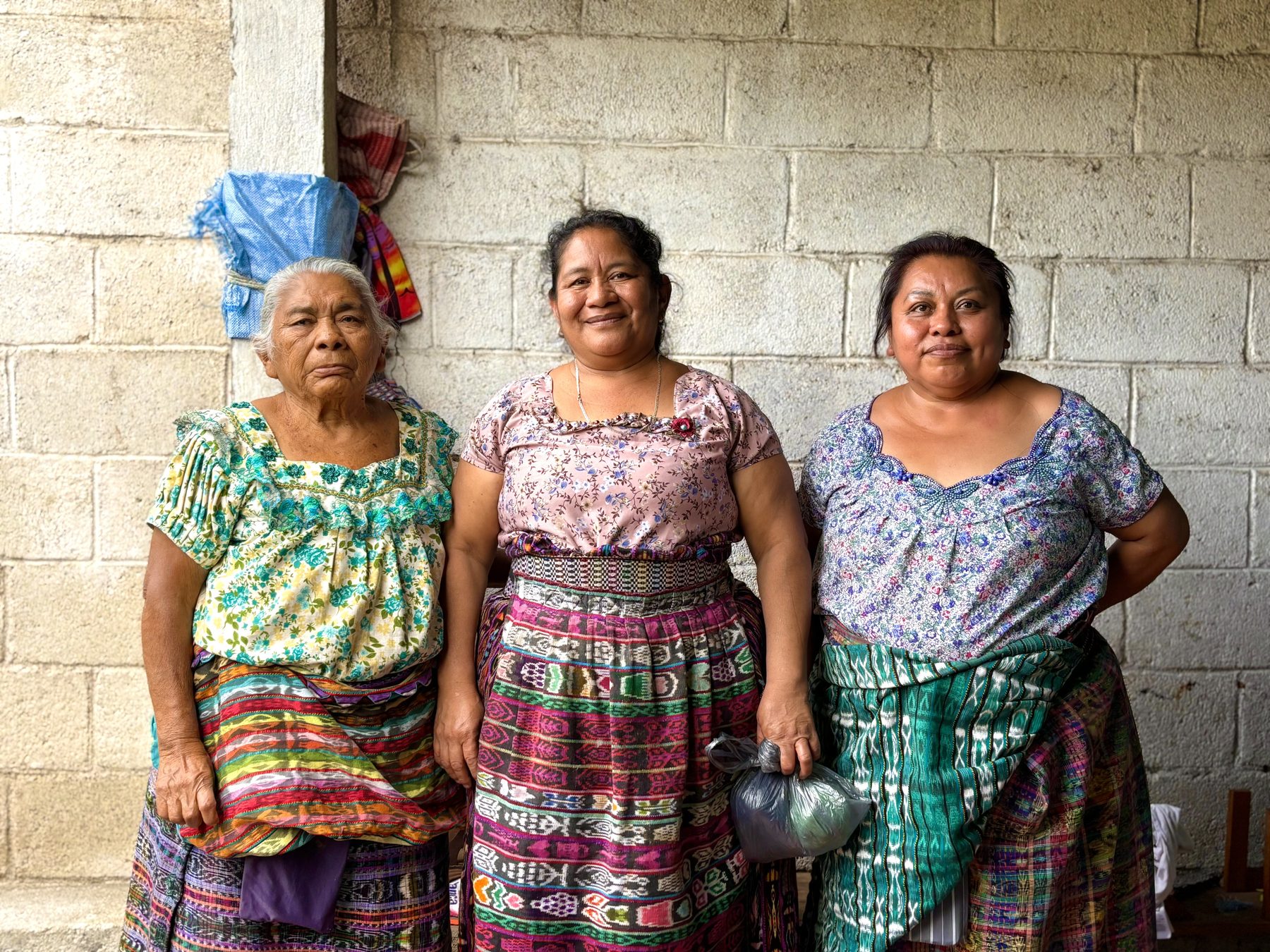
Every piece MamaQuilla carries was made by someone with a name.
These are the women we work with: partners and teachers, and the keepers of techniques passed down through generations. Here you can meet some of them, and the communities they belong to.
Q'olle
The women of Norberta's family, with whom Cat-Vi lived and first learned to weave.
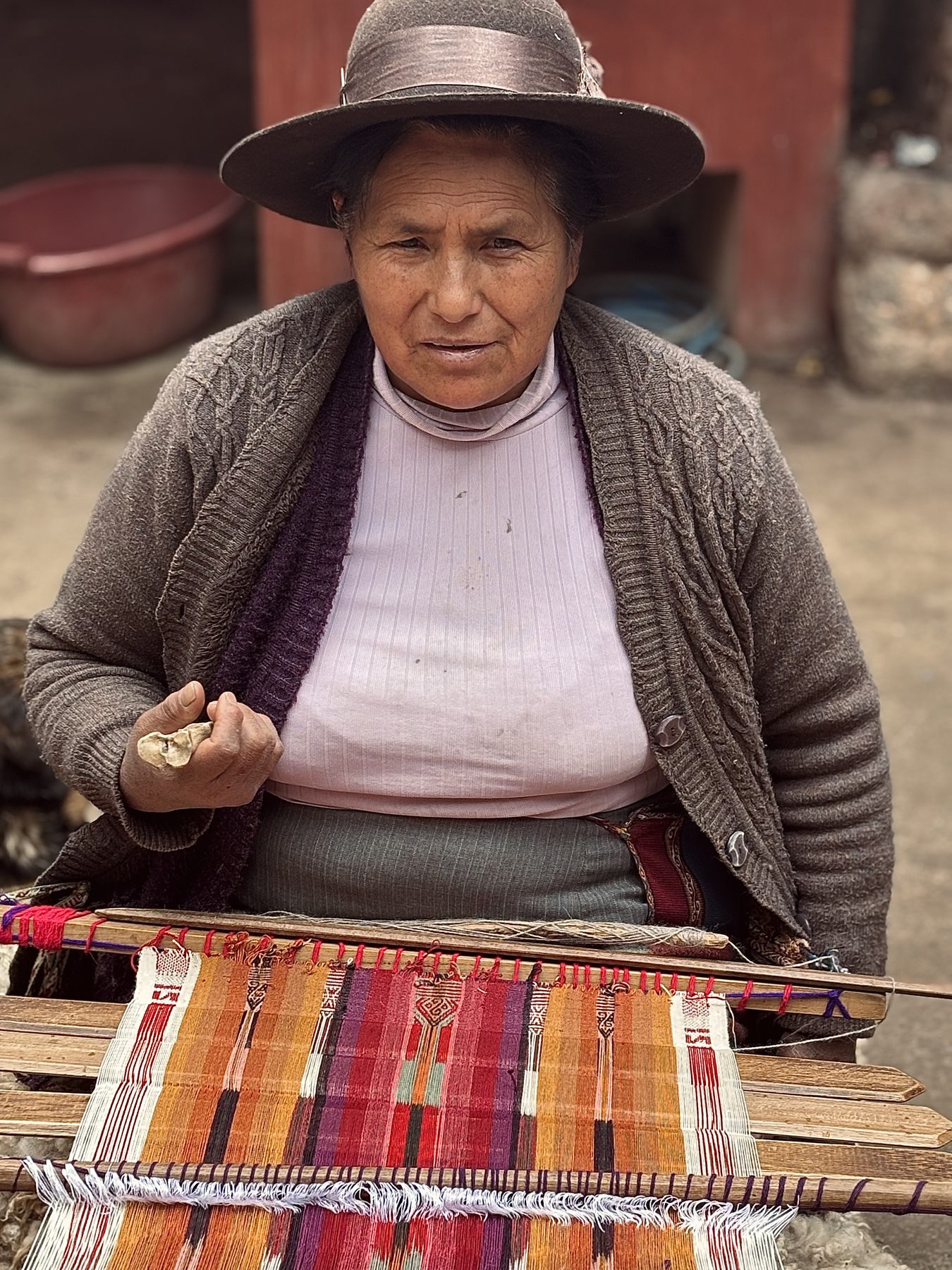 Norberta · Chinchero
Spinner, weaver, shopkeeper. Matriarch of the family.
Norberta Auccacusi Huamán lives in Chinchero, in the Peruvian Andes, at 3,700 meters. She is the matriarch of the family with whom Cat-Vi lived and learned to weave.
Her days begin before dawn, at half past five, with the dishes from the night before in icy water, then breakfast with her husband and sons. Above the family house she keeps a small shop, which opens early, because Chinchero is the first stop in the Sacred Valley and the buses arrive with the morning. There she sells her own work and the pieces made by the women of her family.
As she moves through the day, she spins. It is rare to see a woman of the Andes without wool resting on her shoulder, her fingers turning the spindle almost without thought. The weaving itself she does on the backstrap loom, the tejido plano her grandmother taught her as a child, a thread passed from hand to hand.
Much of her day is shared. She helps a friend set up her loom, prepares raw wool, answers her neighbors' requests. In Quechua, this reciprocity is called ayni: today I help you, tomorrow you help me. It is a quiet, living balance that holds the community together, a way for work and care to circulate between people.
At midday the family gathers at the workshop to eat together, the meal cooked slowly in the pachamanca, the earth oven where food cooks beneath hot stones. In the evening she goes to the fields to gather potatoes, then returns to cook dinner for her family.
Through all of it, what moves her most is the wish to pass her knowledge on, so that Andean weaving continues, thread by thread, into the hands that come after her.
A short film of Norberta spinning wool from her shoulder, in the quiet rhythm of her day.
This film will appear here when the file is in place.
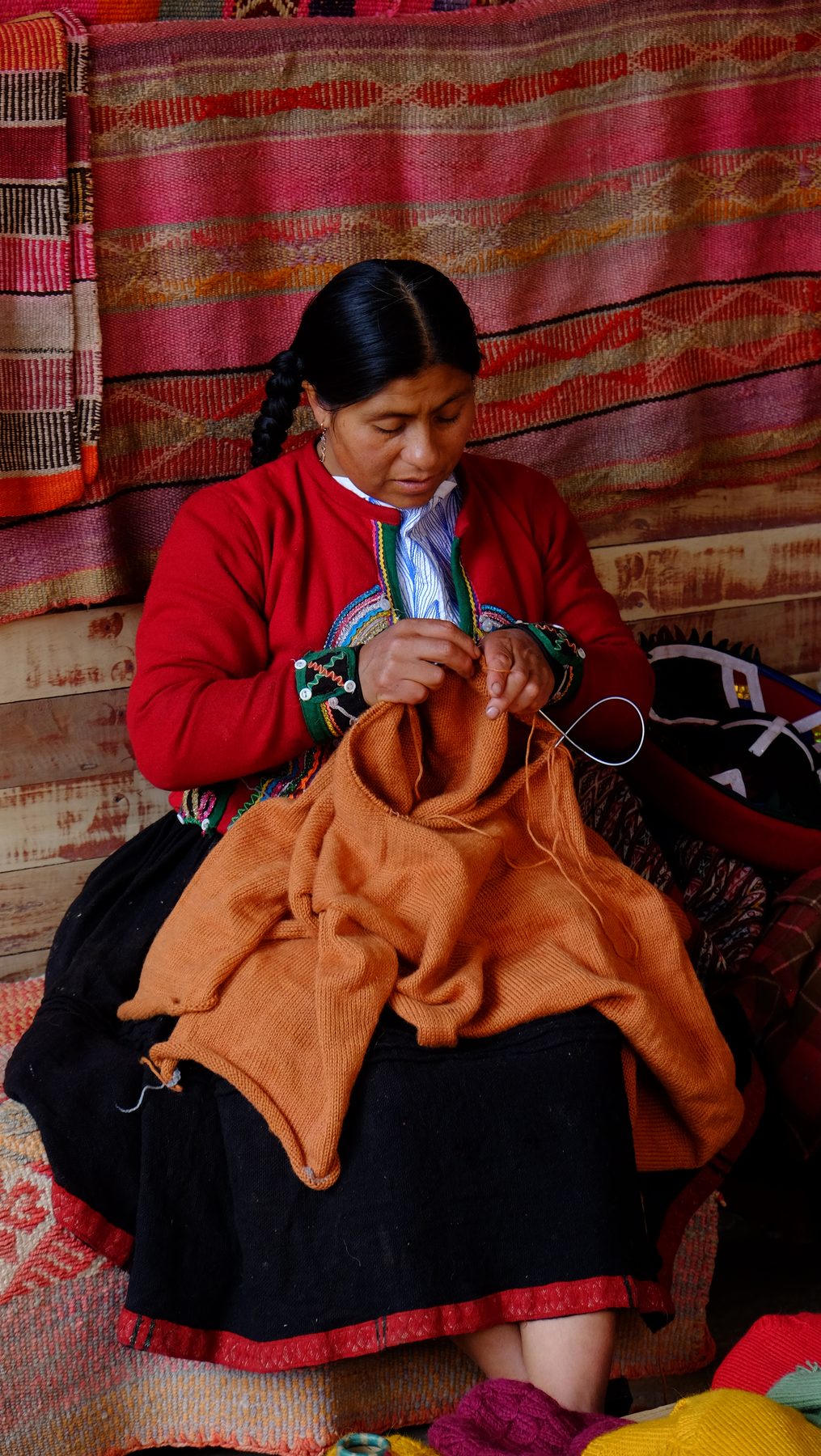 Vilma · Chinchero
Weaver, knitter, mother of three. Norberta's sister-in-law.
Vilma is Norberta's sister-in-law, a weaver and a mother of three, and an exceptional cook. She first learned to knit at the age of ten, sitting beside her mother, and today she knows every step of the work, from raw wool to finished piece. She weaves on the loom, she crochets, and she knits, and she likes to set traditional Quechua symbols into her work, giving each piece meaning and cultural depth.
For all she carries, she moves through her days with a calm and open heart. Weaving is her moment of peace. Once the children are asleep and the house is quiet, she sits at her loom and lets her hands follow the threads, as the women before her did.
Gladys · Chinchero
Weaver, mother of two. Married into the family.
Gladys married into the family, to one of Norberta's brothers, and is a mother of two. She brings a bright, easy warmth wherever she goes, and behind it a real patience at the loom. She first tried to weave at ten, learning from her mother, but it did not come easily and she set it aside. At fifteen she returned to it, with more focus and more practice, and one day it began to make sense.
Today weaving is a way to rest, to reconnect with her roots, and to honor her culture. What she wants most is for the generations to come not to forget the traditions and the symbols held in the cloth.
A short film of Gladys at her loom, in the warmth and good humor she is known for.
This film will appear here when the file is in place.
Yaga
The spinners, weavers, and dyers of the village, who still spin organic cotton by hand.
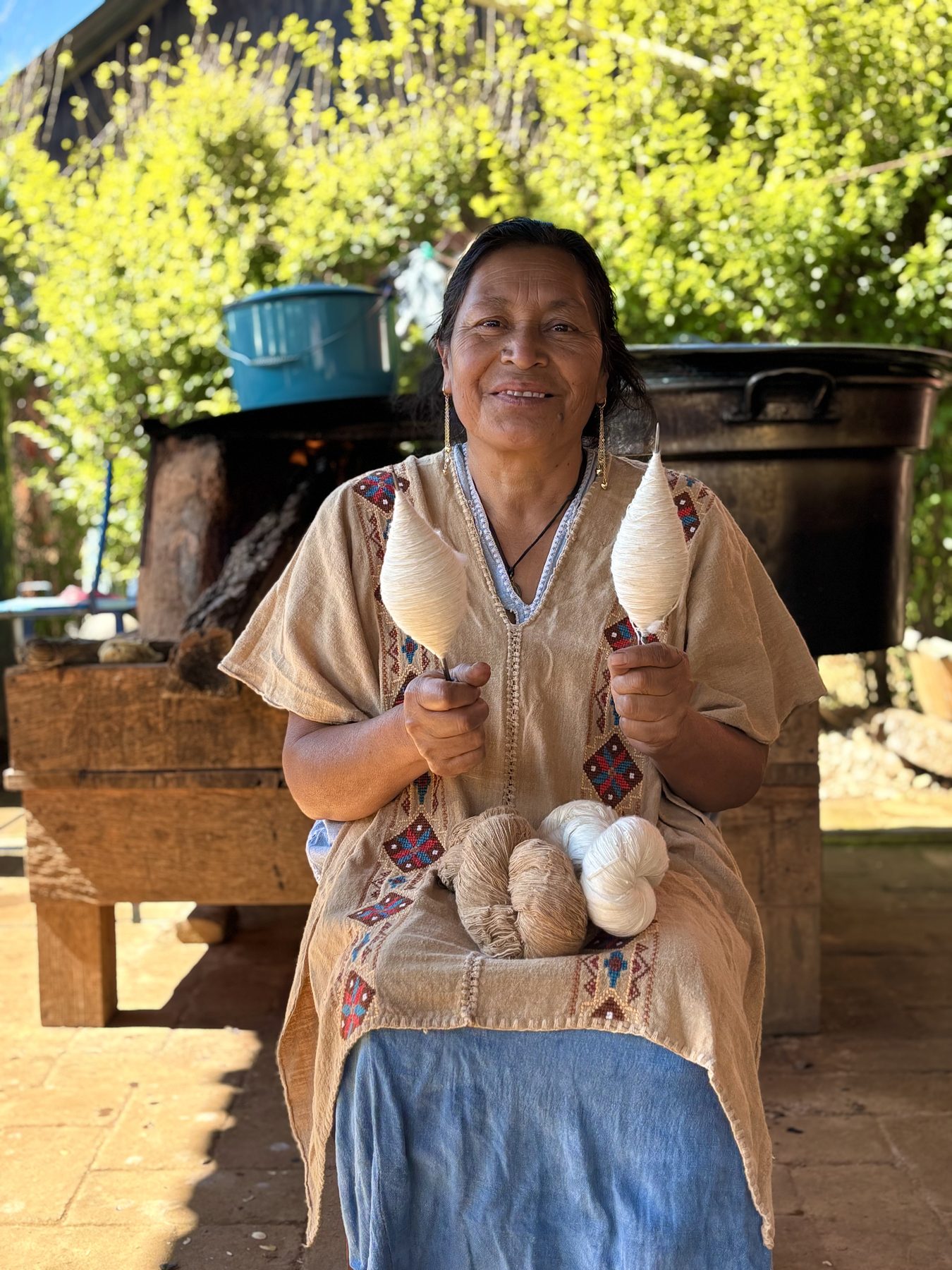 Marcela · San Sebastián Río Hondo
Spinner, weaver, healer, cook. A mother and a grandmother.
Marcela lives in the mountains above San Sebastián Río Hondo. She is a daughter, a mother, and a grandmother. She is a spinner, a weaver, a healer, and a cook, holding many roles at once, as many women in her community do.
Her day begins in the forest, gathering wild mushrooms with a friend to sell at the market. Back home, she builds the fire for her comal, the traditional clay stove, makes tea, and cooks tortillas for her family. Most of the day is spent deseeding, carding, and spinning cotton. Spinning is her main source of income.
Her home is a place people pass through. Neighbors come to her when they are going through hard times, and she does healing work and walks alongside them. Her children and grandchildren visit every day. A year ago she lost her husband to diabetes, as many do in this part of the world.
It was Marcela who taught Cat-Vi to spin.
A quiet, spontaneous moment between Marcela and Cat-Vi. You see her home, her spinning wheel, and the ease of the place. No sound needed.
Nichim
Xunca, of the cooperative Mujeres Sembrando la Vida.
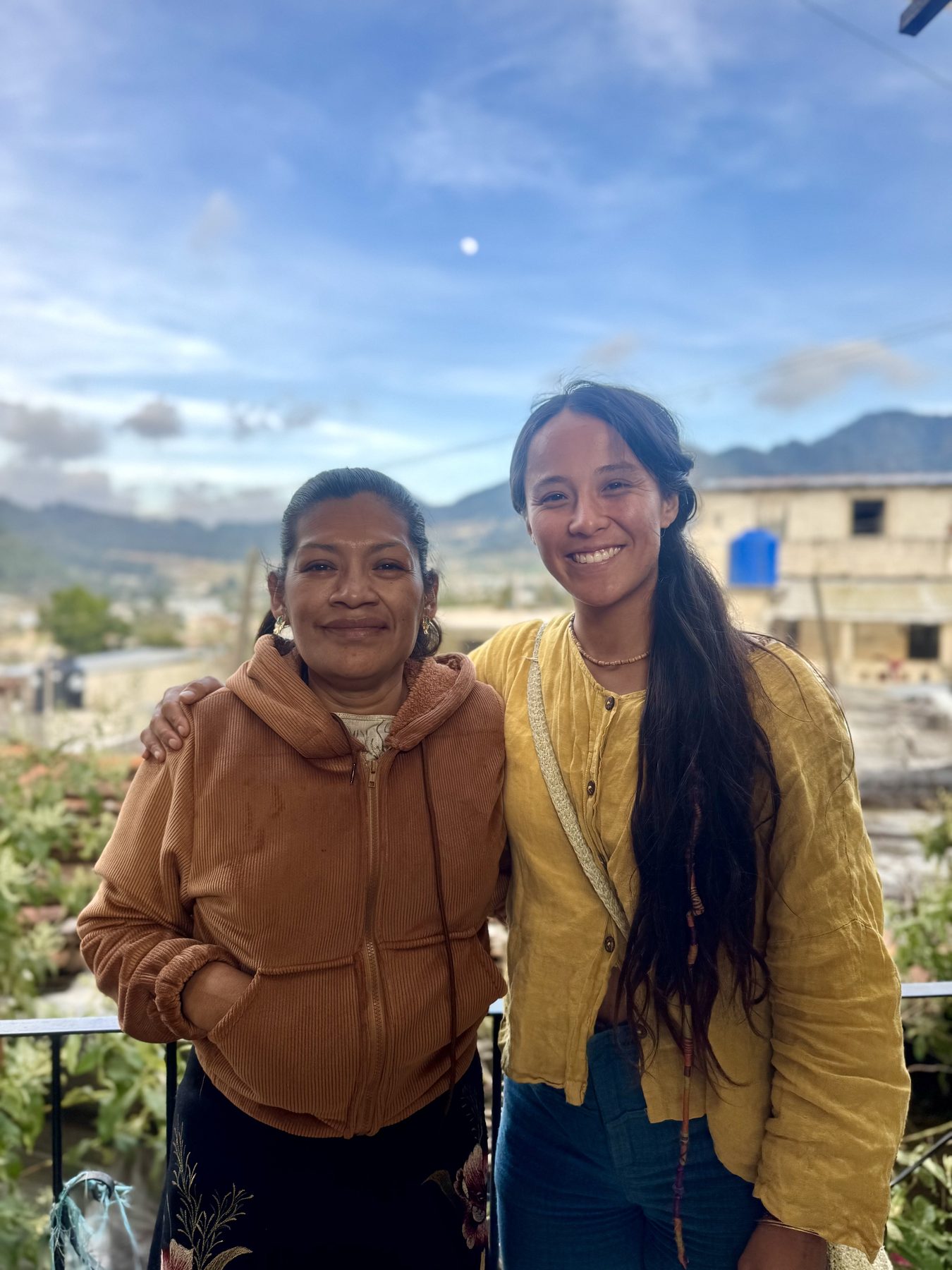 Xunca · Zinacantán
Weaver and teacher at the learning center of Mujeres Sembrando la Vida.
Xunca belongs to the family behind Mujeres Sembrando la Vida, a women's cooperative in Zinacantán. When Cat-Vi and her partner Adam found the cooperative, far from the tourist part of the village, it was Xunca who welcomed them, told them how the women had built it, and showed them the work.
Like the women before her, she learned to weave on the backstrap loom, the telar de cintura, a skill passed from mothers and grandmothers and carried only by women. She speaks Tsotsil, the Maya language of Zinacantán, and works at the cooperative's learning center, where teaching is done in that language.
They met just after Día de los Muertos, and Xunca showed them her altar, laid with corn, sugarcane, fruit, candles, and marigolds for the ancestors. However little a family has, she said, the offering is never set aside.
Xunca, in her own voice. A short film in Spanish in which she introduces herself and the cooperative.
This film is being subtitled. It will appear here soon.
Ixoq
Oralia and Amparo, founders of Trama Textiles.
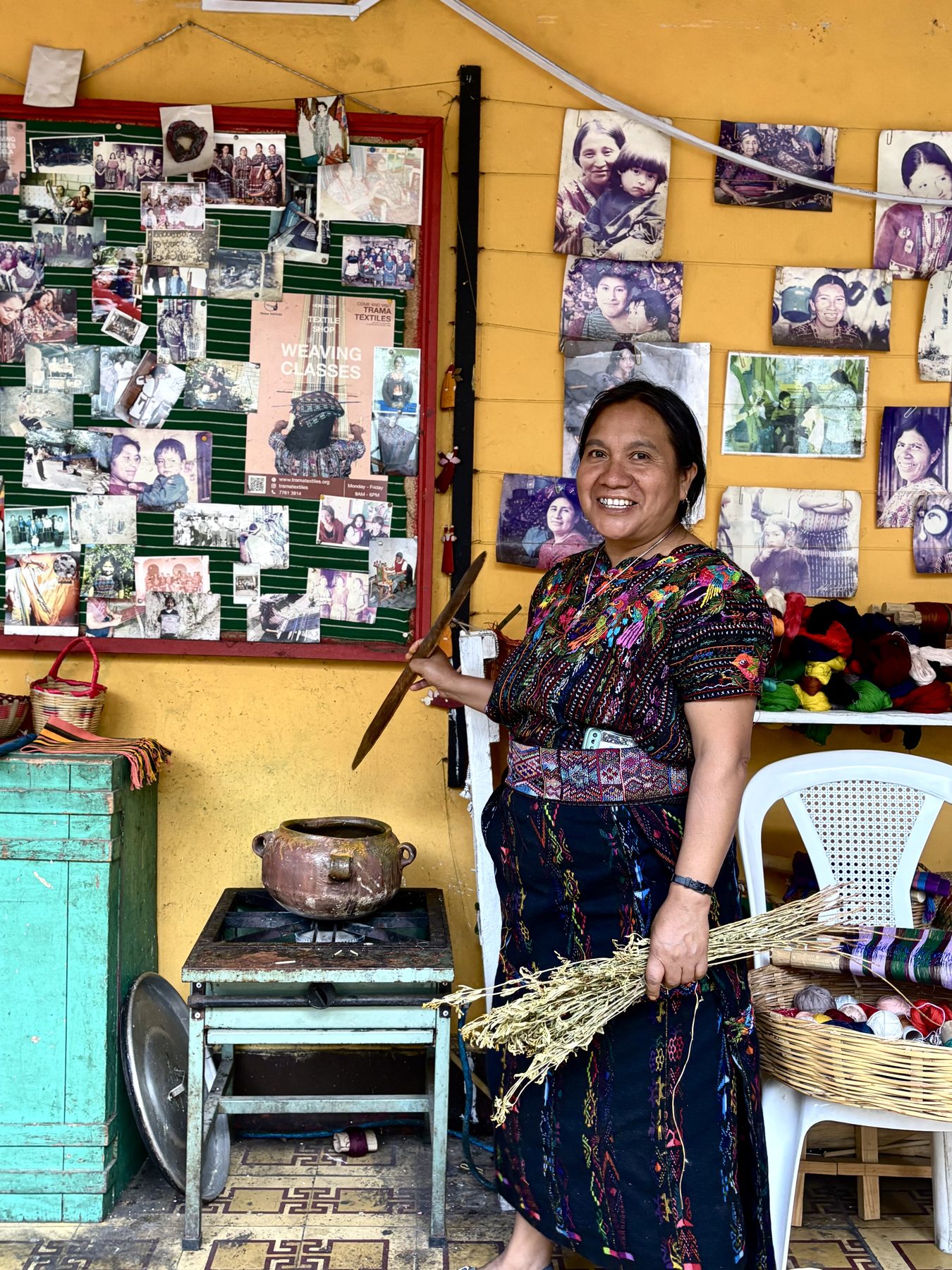 Oralia · Trama Textiles
Co-founder and president of Trama Textiles, a Maya women's cooperative born in 1988.
Oralia lives in Quetzaltenango, the city known as Xela. She spends her days at Trama Textiles, the cooperative she founded with Amparo at the end of the 1980s, after Guatemala's civil war. In those years many women were left widowed. Oralia, a mother and a widow herself, built the cooperative to help these women feed their children and recover their dignity through weaving.
Today she is president of an organization that supports more than a hundred and fifty women across many communities. Her days are full. She teaches weaving to the travelers who pass through Xela, welcomes the Indigenous women who come to sell their work, and moves between classes, meetings with the weavers, and the care of the volunteers.
It is a great deal for one person to carry, and she carries it with a love for the craft and the women it holds together. Between Oralia and Amparo there is a long friendship and a deep respect, the ease of two people who have worked side by side for a very long time.
A short film of the Trama Textiles space, the volunteers, and the atmosphere of the place. Not a founder introduction, a feeling of the room.
This film is being prepared. It will appear here soon.
MamaQuilla grows slowly. Leave your email to receive word of new pieces, upcoming events, and the stories behind the collections.
We write rarely, and with care.