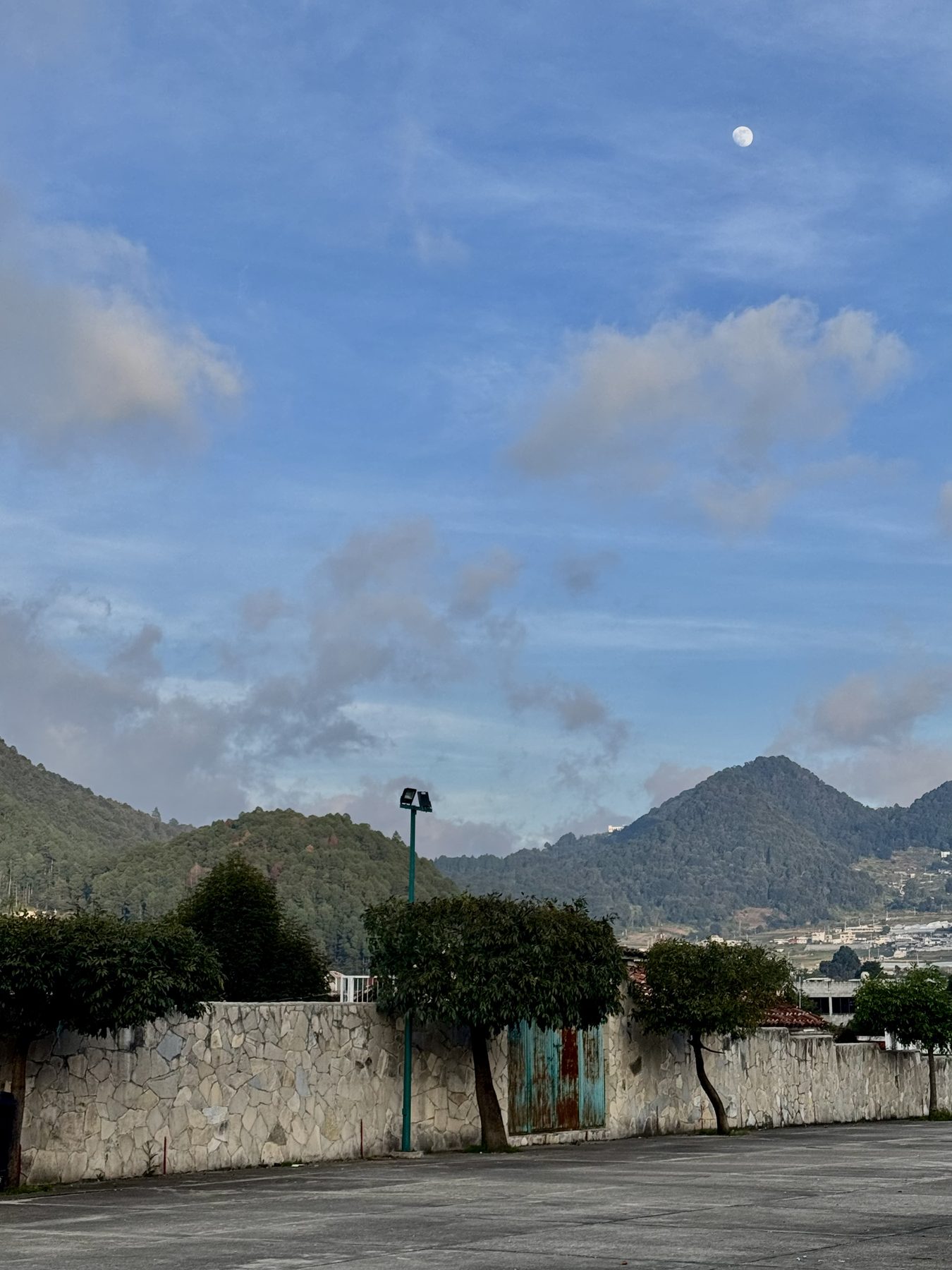
Zinacantán · Chiapas, Mexico
Flowers, in thread and in color, from the highlands of Chiapas.
Nichim comes from Zinacantán, a Maya town in the highlands of Chiapas where the Tsotsil language and its customs are still alive. It was made with a cooperative of women whose work is covered in flowers. What follows is the story of how we found them, and why their work stayed with us.
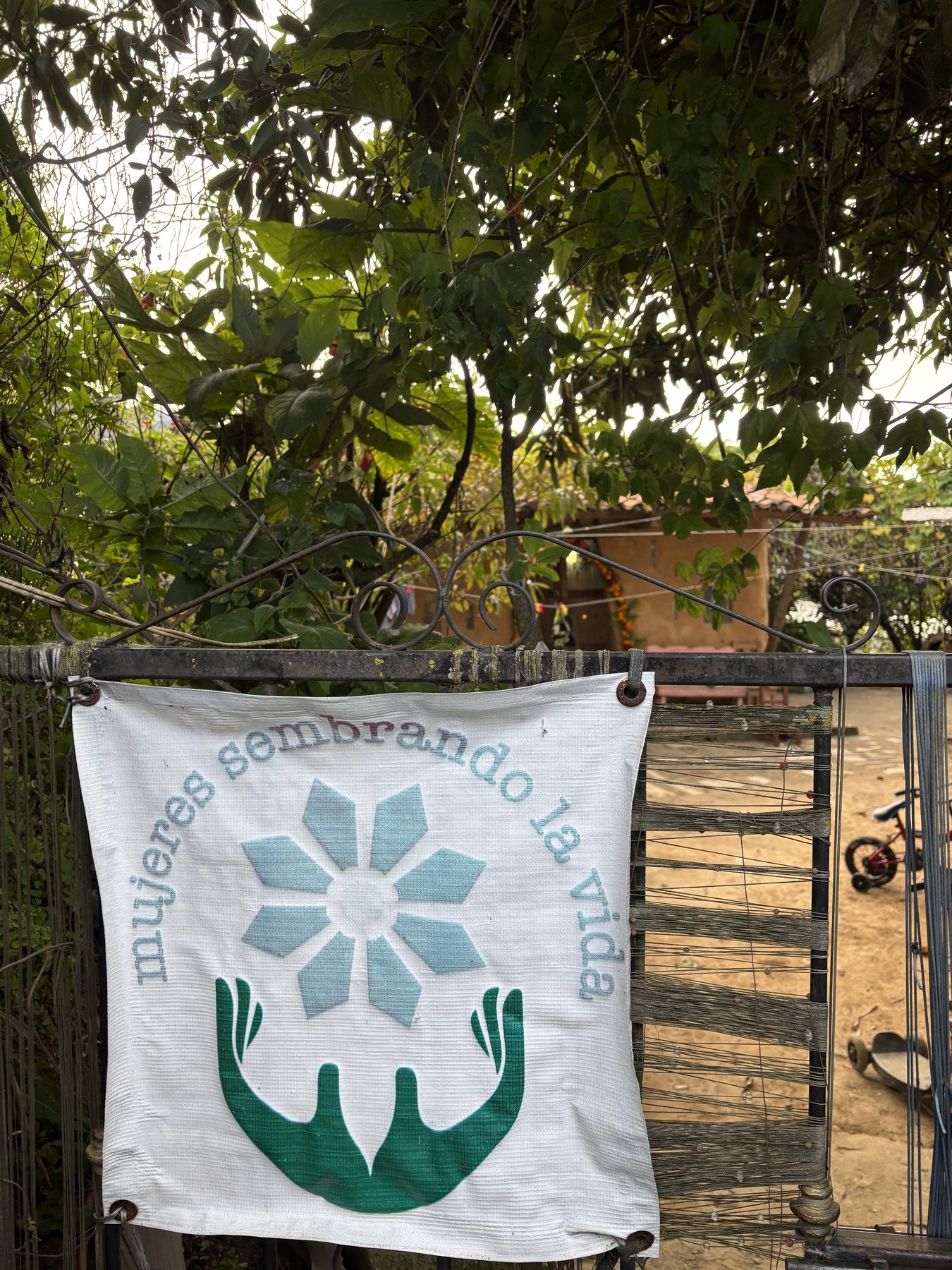 Mujeres Sembrando la Vida
Zinacantán is known across Chiapas for its weaving, and tourism has understood this. Textile tours are in demand, which in itself is a good thing, yet at the entrance to the village the experience can feel arranged: a guide assigned, a demonstration performed, a sense of a show rather than a meeting. Cat-Vi and her partner Adam arrived this way, and almost left disappointed.
Before the trip, Adam had written to a women's cooperative he had found online, Mujeres Sembrando la Vida. Remembering this, they went looking for it, far from the tourist area, with little signposting to guide them. After a long search they found it, and there they met Xunca and her family.
What they found was the opposite of the entrance to the village. Surrounded by mountains and fresh air, children playing nearby, far from the intensity of the entrance and held in an almost silence, it felt human and built on real community. The houses here are built from natural materials, adobe among them.
At the cooperative, everything lives in one place. The kitchen with its great altar, the shop where the textiles are shown, the garden with fruit trees and chickens running between them. It is something Cat-Vi has found in each of these communities: daily life, work, food, and family woven together rather than kept apart.
In the shop, among the textiles, hang photographs of the mother and the women who work there. They make the place feel alive, and they show what it is: a lifetime of work and dedication. It was an honor to meet the mother who began it all. She spoke only Tsotsil, and through her daughters her welcome still carried. From one strong woman, a legacy has grown, for her daughters, and for the women of Zinacantán.
Mujeres Sembrando la Vida, whose name means women sowing life, is a cooperative of around two hundred Tsotsil Maya women from five communities of Zinacantán. It was founded in 1999 by a group of women from across the municipality, and it has carried on for more than twenty-five years.
Like many cooperatives in this part of the world, it began out of necessity. Women came together to support their families and to hold on to their traditions, through the one knowledge that was theirs to build on: weaving. Today the founder's daughters help carry the work forward, Xunca among them, who welcomed Cat-Vi and Adam and told them the cooperative's story.
The women describe their work simply. Each piece sold is an apoyo, a support, for a family. They reinvest around ten percent of their profit into a community initiative of their own, a learning center where teaching is done in Tsotsil, their mother tongue. Behind every piece are hours of work, by day and by night, made alongside their families and, as they say themselves, made with love.
The women of the cooperative work on the backstrap loom, the telar de cintura, the technique their mothers and grandmothers passed down, and one carried only by women. Some specialize in fine hand embroidery, others in different weaving techniques. The pieces are made of cotton, and they are full of flowers and color, brighter and more floral than the traditional Chiapas textiles many people picture.
They also make use of everything. Leftover cloth is recycled into bags and accessories, so that little is wasted.
After Oaxaca, MamaQuilla leaned firmly toward natural fibers and natural dyes. Zinacantán changed that thinking. Not every community can work that way. It is rarely a matter of will, and almost always a matter of access. Even among low-income communities there are different realities, and the women with the fewest resources are often those in greatest need.
Cat-Vi arrived in this work with clear ideas about what she wanted and did not want. Meeting the women of Mujeres Sembrando la Vida softened that rigidity into something steadier. It is good to have a direction, natural fibers, natural dyes, time spent living alongside a family, but a direction held too tightly can close the door on what is real. What she felt from these women, the truth in their story and their work, mattered more than whether it matched the picture she had carried.
So MamaQuilla holds its care for the earth alongside a wider openness. It will not work with anything that goes against its values, but it has learned not to mistake a preference for a principle. The brand welcomes what is true. That openness, without judgment and without projection, is part of who MamaQuilla is. The Nichim pieces are cotton, woven by hand, some embroidered, some plain. What matters is that the work is real, the makers are known, and they are fairly supported.
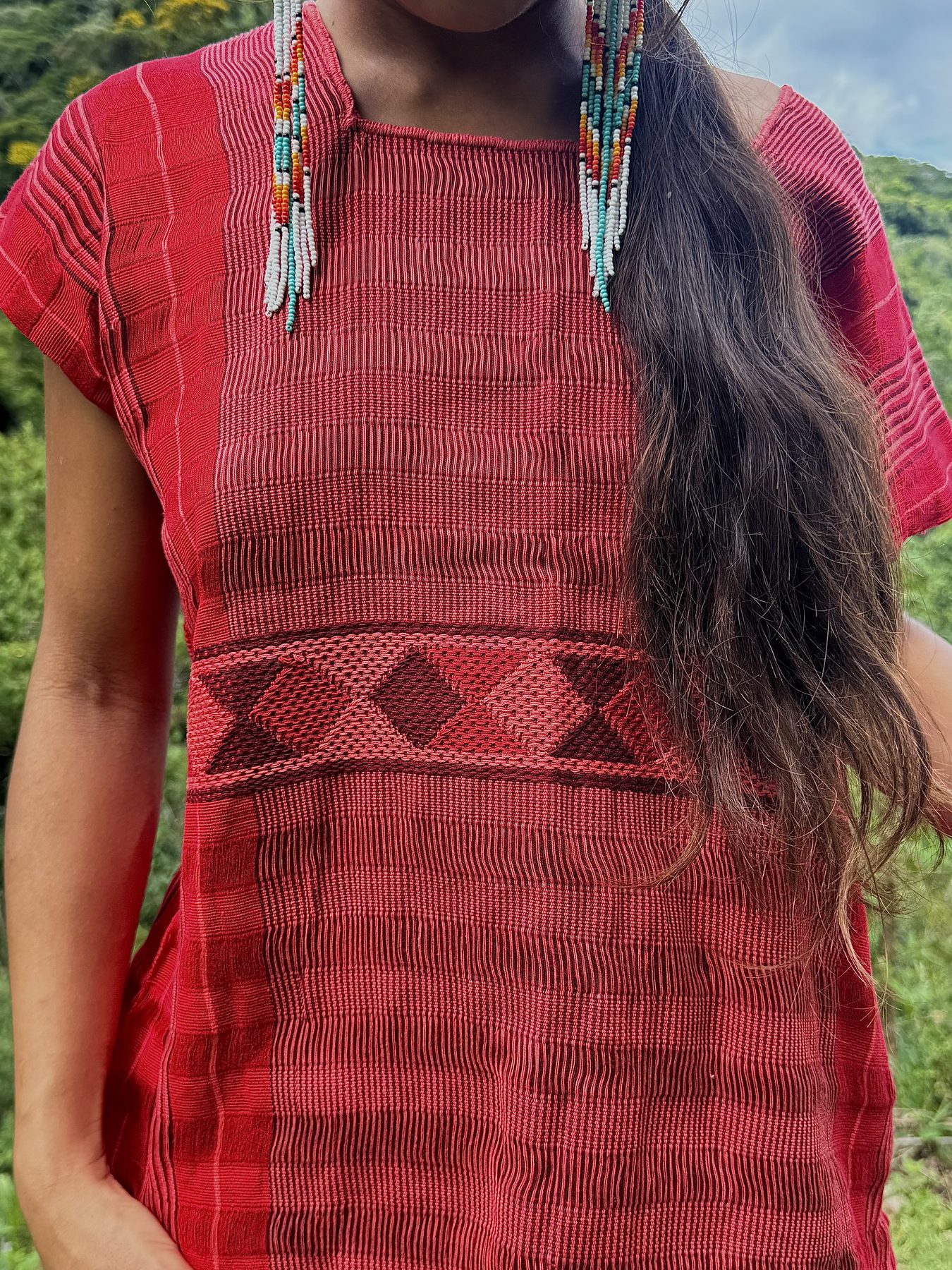 Embroidered cotton · Nichim
The pieces Cat-Vi chose from the cooperative are cotton, woven on the backstrap loom, some carrying fine embroidery and some left plain. They are flowered and full of color. Most were sold through the early pop-ups, and only a few remain.
Most Nichim pieces have already found their wearer. Sold pieces remain visible as Archive, so the collection still tells its story in full.
When you choose a piece from Nichim, your support reaches the women of Mujeres Sembrando la Vida directly, the families across five communities of Zinacantán, and the learning center they run in their own language, Tsotsil. In their own words, each piece is an apoyo, a support. To wear one is to carry a little of their life, and to help their work continue.
Nichim means flower in Tsotsil. The name belongs to the cloth, which is covered in flowers, and to the moment we arrived, just after Día de los Muertos, when the village was full of marigolds and offerings. Xunca showed us her altar, laid with corn, sugarcane, fruit, candles, and flowers for the ancestors. We saw how, however little a family has, the offering is never set aside. The marigold is the flower that calls the ancestors home, and so flowers here hold both color and memory.
Textiles as vessels of story, memory, and relationship.
MamaQuilla grows slowly. Leave your email to receive word of new pieces, upcoming events, and the stories behind the collections.
We write rarely, and with care.