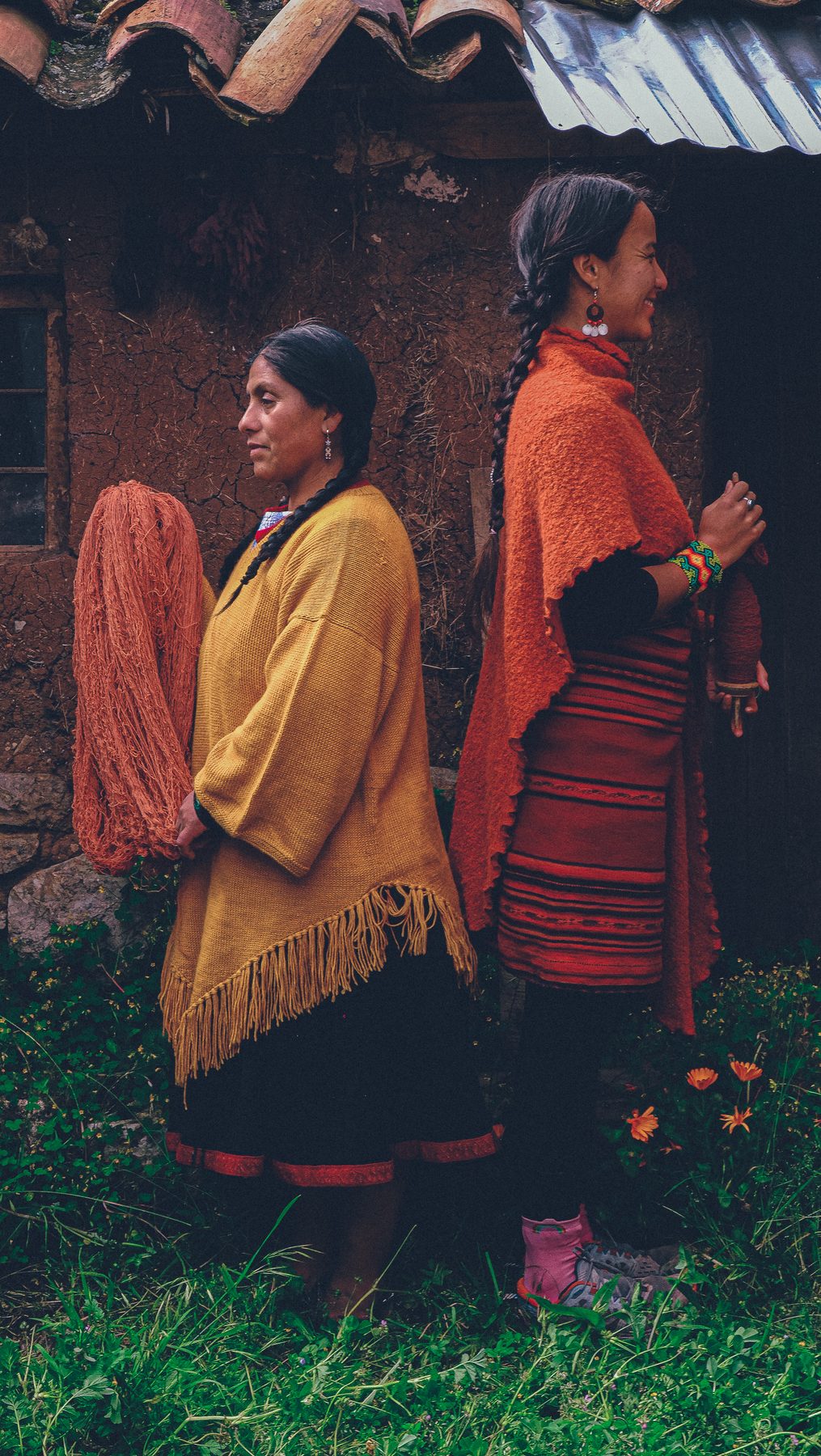
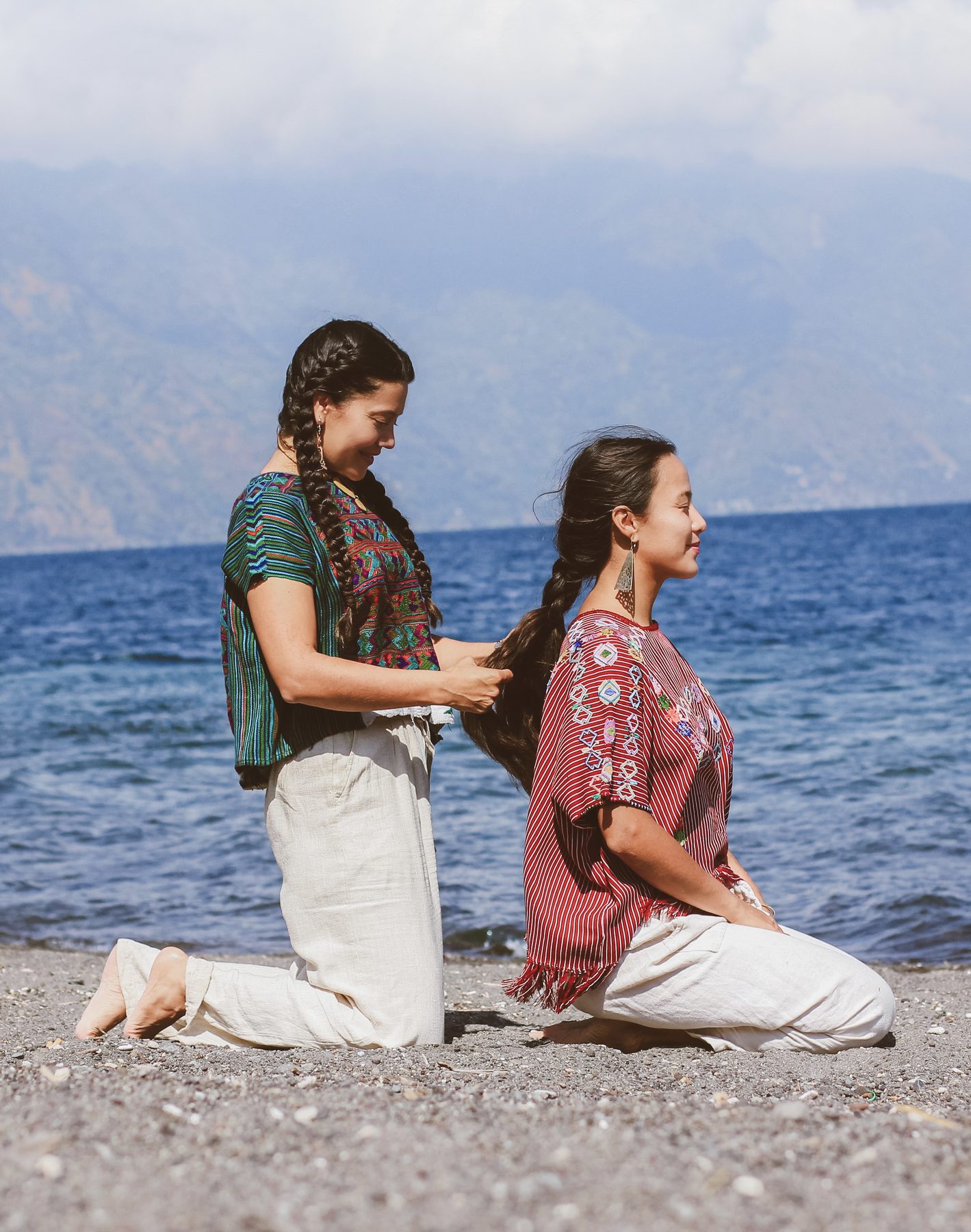
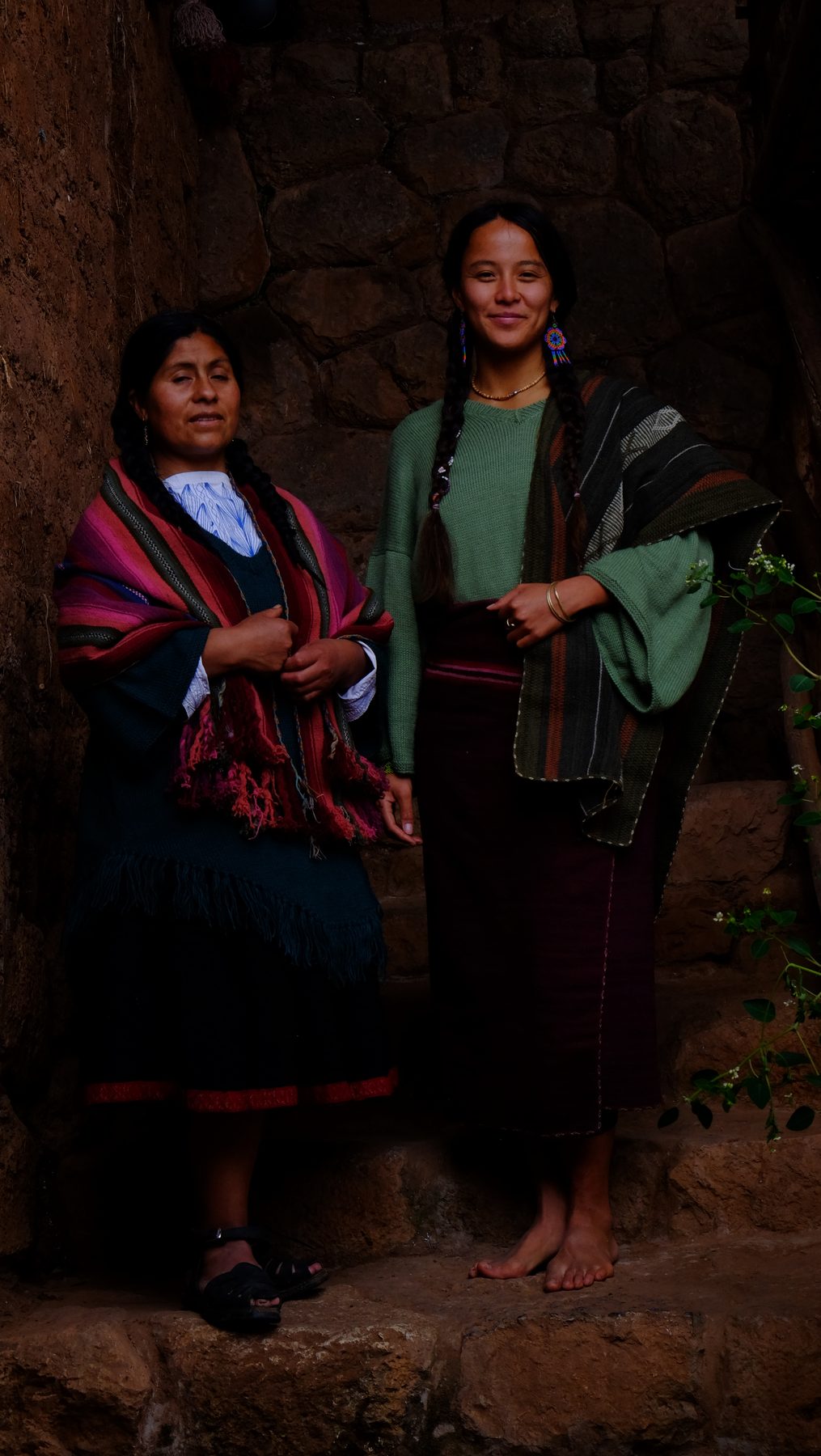
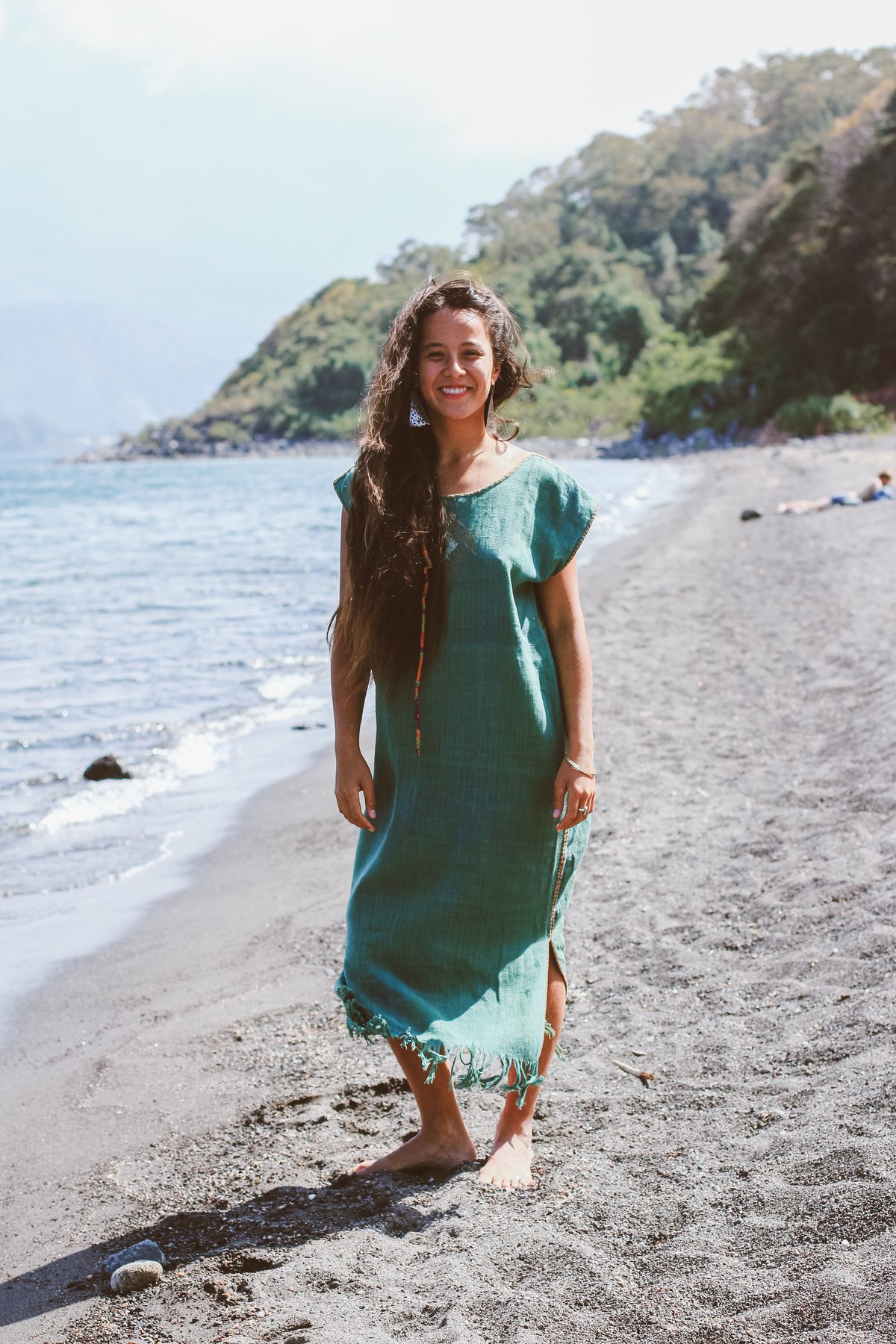
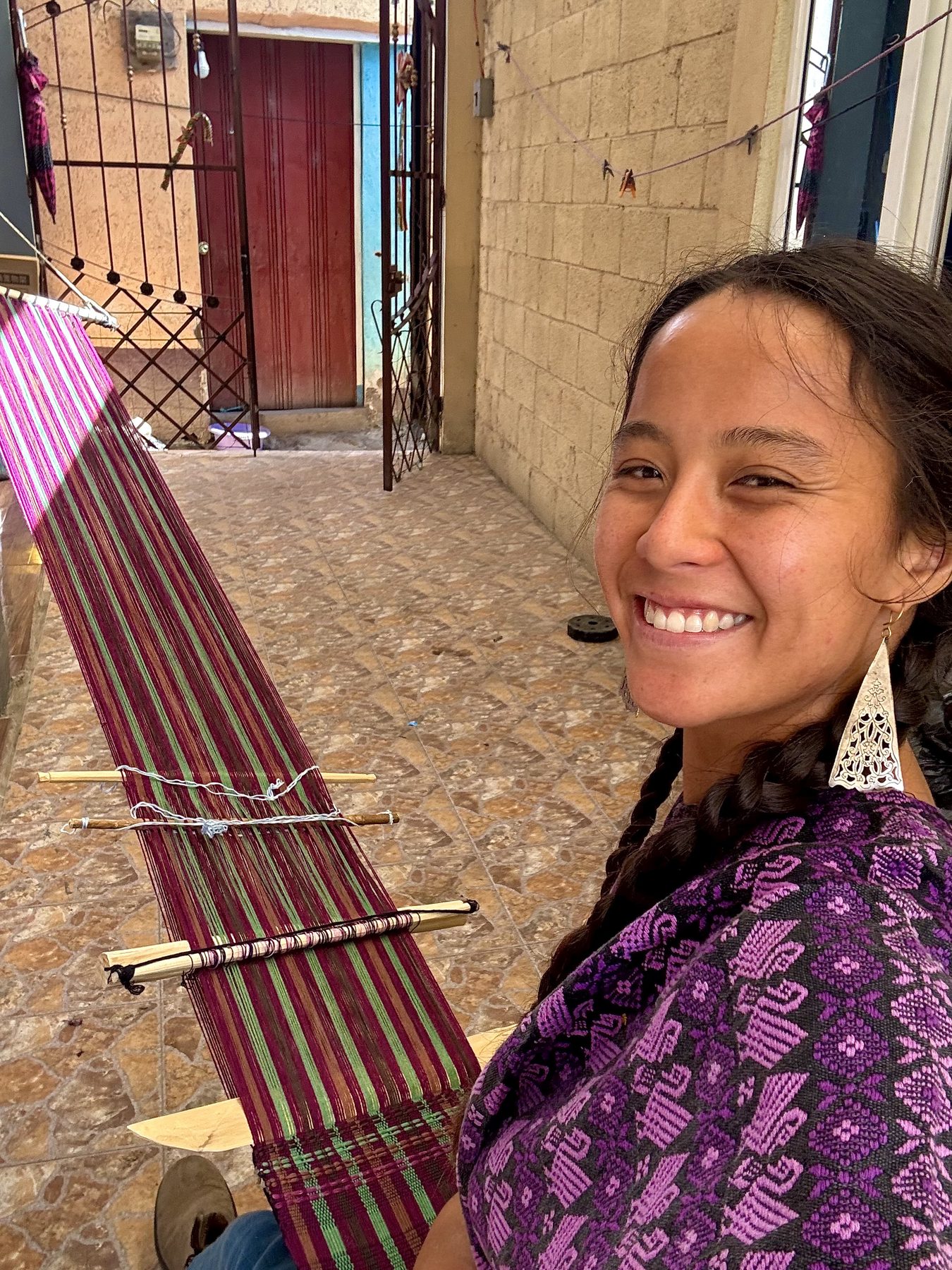
Behind every piece is a woman, a community, and a reason this brand exists at all.
Part One
About MamaQuilla
MamaQuilla is a slow textile brand rooted in cultural connection,
ancestral craftsmanship, and intentional living. Working alongside
weaving communities in Latin America, we circulate and co-create
garments and textiles that carry stories, memory, and human
connection. Each piece is an invitation to wear something
meaningful, honoring the hands, the traditions, and the
territories behind what we wear.
We are not a luxury brand in the usual sense, and we are not fast
fashion. If luxury is being redefined as slow, ethical, and
relational, then that is where we belong. We think of ourselves
as a relational textile house, and as something closer to a
cooperative of cooperatives: a living network where each
community keeps its own name, voice, and integrity.
Textiles as vessels of story, memory, and relationship.
The spirit behind our name
MamaQuilla takes its name from Mama Quilla, the Incan goddess of
the moon, time, and womanhood in the Quechua tradition. Because
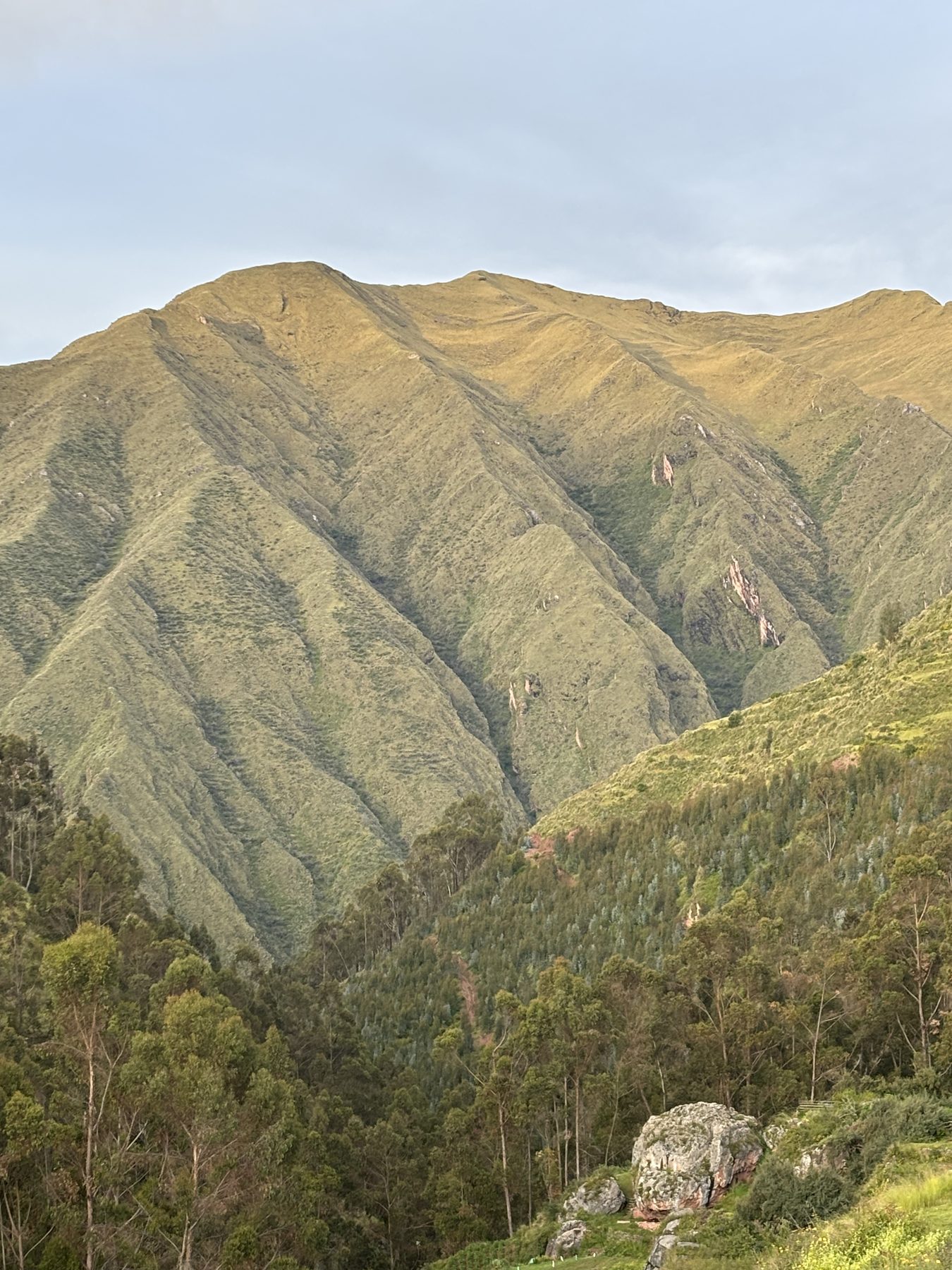
our brand was born in Peru, in the heart of the Andes, it felt
essential to honor the land where the first seed of this vision
was planted.
For us, the name is a way of remembering where we come from. It
is a reminder that behind every creation there is a territory, a
lineage, a story, and the women who carry it forward.
Women have always been at the center of textile traditions around
the world. They are the weavers of our world, the ones who gather
threads, preserve knowledge, transmit memory, and sustain life
itself. MamaQuilla was born as an homage to these women: to the
hands that weave, the cultures that endure, and the invisible
threads that connect us all.
I come from a line of women who loved cloth. My grandmothers, my
aunties, my mother, each had her own style, her own sense of
color and texture and design. They taught me, long before I knew
it, that what we wear is a language.
What stood out with my mother was her care for the cloth itself.
For as long as I can remember she chose fabrics that were high in
quality, soft, and made with care for the earth. I did not have a
name for it then, but the values I now build MamaQuilla on,
natural fibers, things made well and made to last, were already
in our home. They came to me through her.
Where I come from
My roots reach across the world. My mother left Vietnam by sea,
one of the boat people, and reached a refugee camp in the
Philippines before she found safety in Switzerland. My father
grew up in Kingston, Jamaica. I was raised in Geneva, surrounded
by languages, cultures, and ways of seeing the world, with
education and travel but not financial abundance.
That upbringing taught me to feel at home among differences, and
to help others feel safe and at ease. Much later, I would
understand that weaving had become a way of gathering the threads
of my own story, the many roots inside me, into something whole.
A vision in a museum
A few years ago, my family and I organized a trip together to
Vietnam, a kind of return to our roots, walking the land our
family comes from. One day, in a museum in Pleiku, I entered a
room of traditional clothing worn by Vietnam's Indigenous
communities, and something opened in me. I saw my aunties, my
mother, my cousins, and myself, weaving together on looms high in
the mountains. In that moment something ancient woke, a pull
toward craft, toward ancestry, toward the women who carry these
traditions.
It was a return to our roots in more ways than one. For my
family, it was the land of our ancestors, where we come from.
For me, it became something more: a way back to myself, and to
what I have come to feel is the essence of life, weaving.
When I came home, I found a teacher, bought a loom, and made a
quiet decision: that my life would follow the thread of weaving.
The call I followed
For a few years I worked as a primary school teacher in
Switzerland, and I loved it. But there was a calling I could not
ignore, a pull to go and meet the weavers of Latin America and to
learn from them directly. So that is what I set out to do. When I
left, my intention was simply to learn how to weave alongside
Indigenous women.
I never imagined it would lead to building anything like a brand.
I knew nothing about that world. MamaQuilla was not a plan I
carried with me. It grew, slowly, out of the relationships I
found along the way.
The years that followed
That thread led me across Latin America. Between 2024 and 2025 I
lived for long stretches with Indigenous families in Peru,
Mexico, Guatemala, and Brazil, sitting for hours beside women at
the loom, learning through presence rather than theory. In
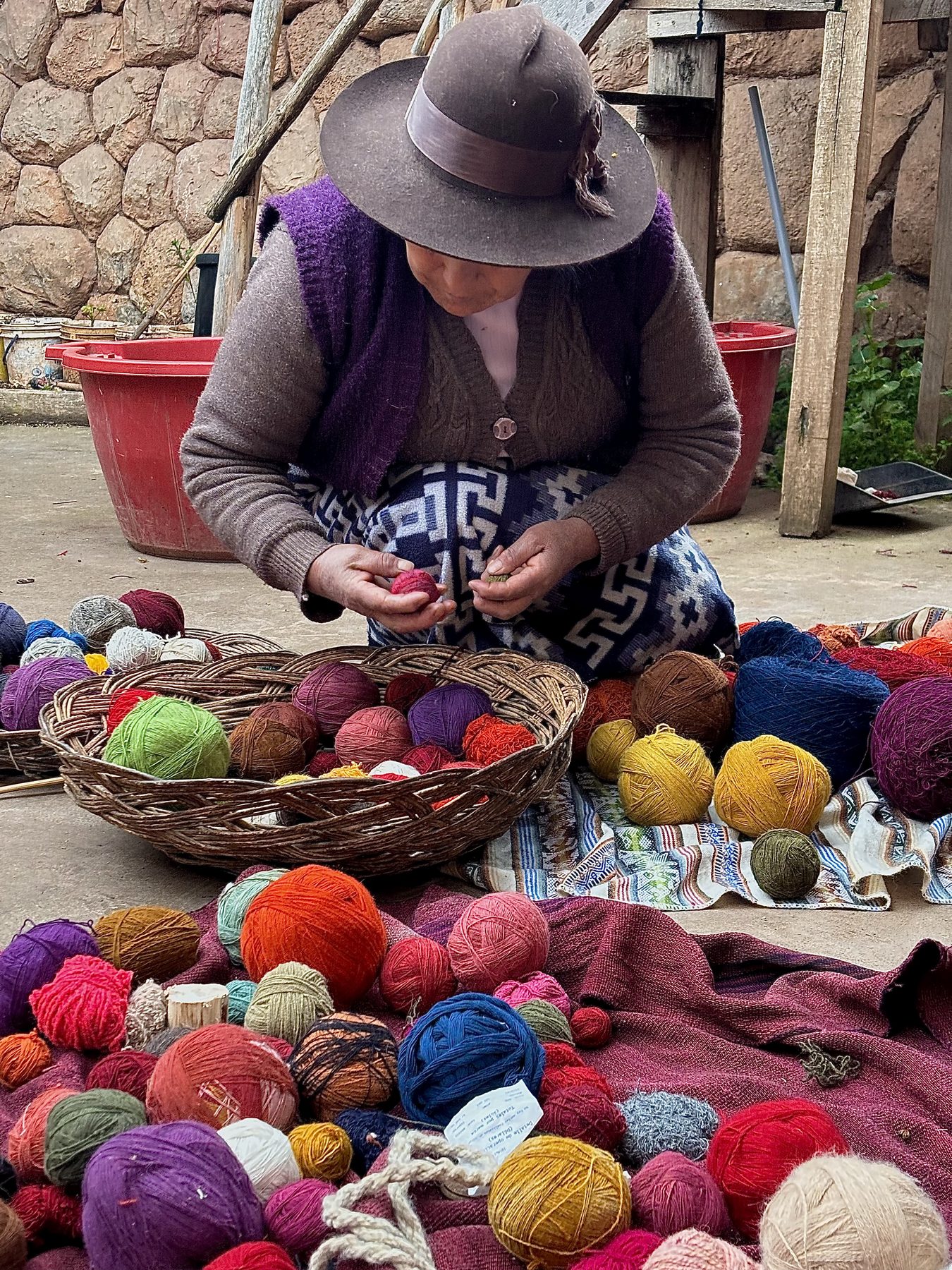
Chinchero I lived a month with Norberta and her family, and it
was there that the first collection, and MamaQuilla itself,
began.
In each place I learned something I could not have learned from a
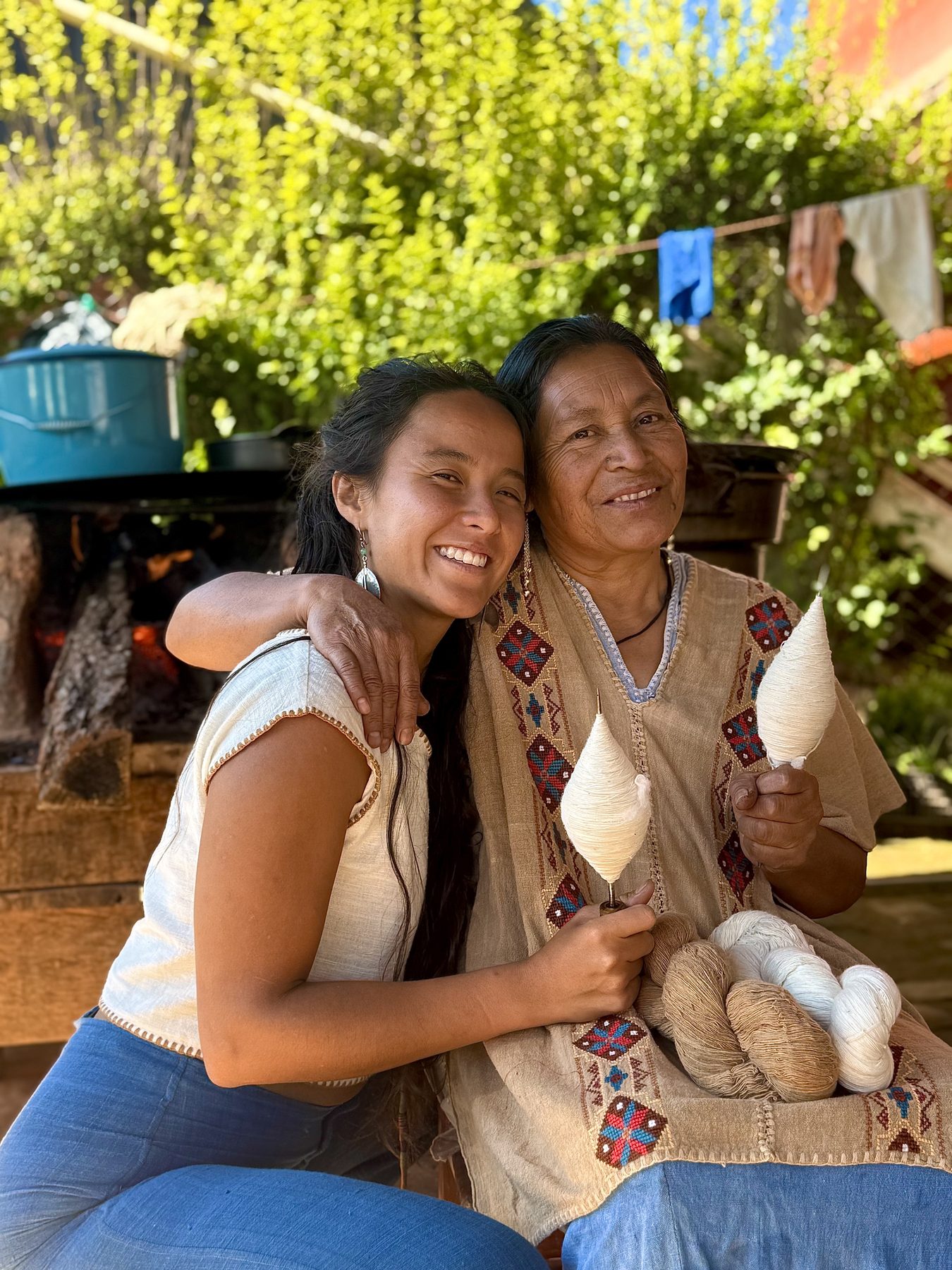
distance. From the women of Oaxaca, the patience of spinning
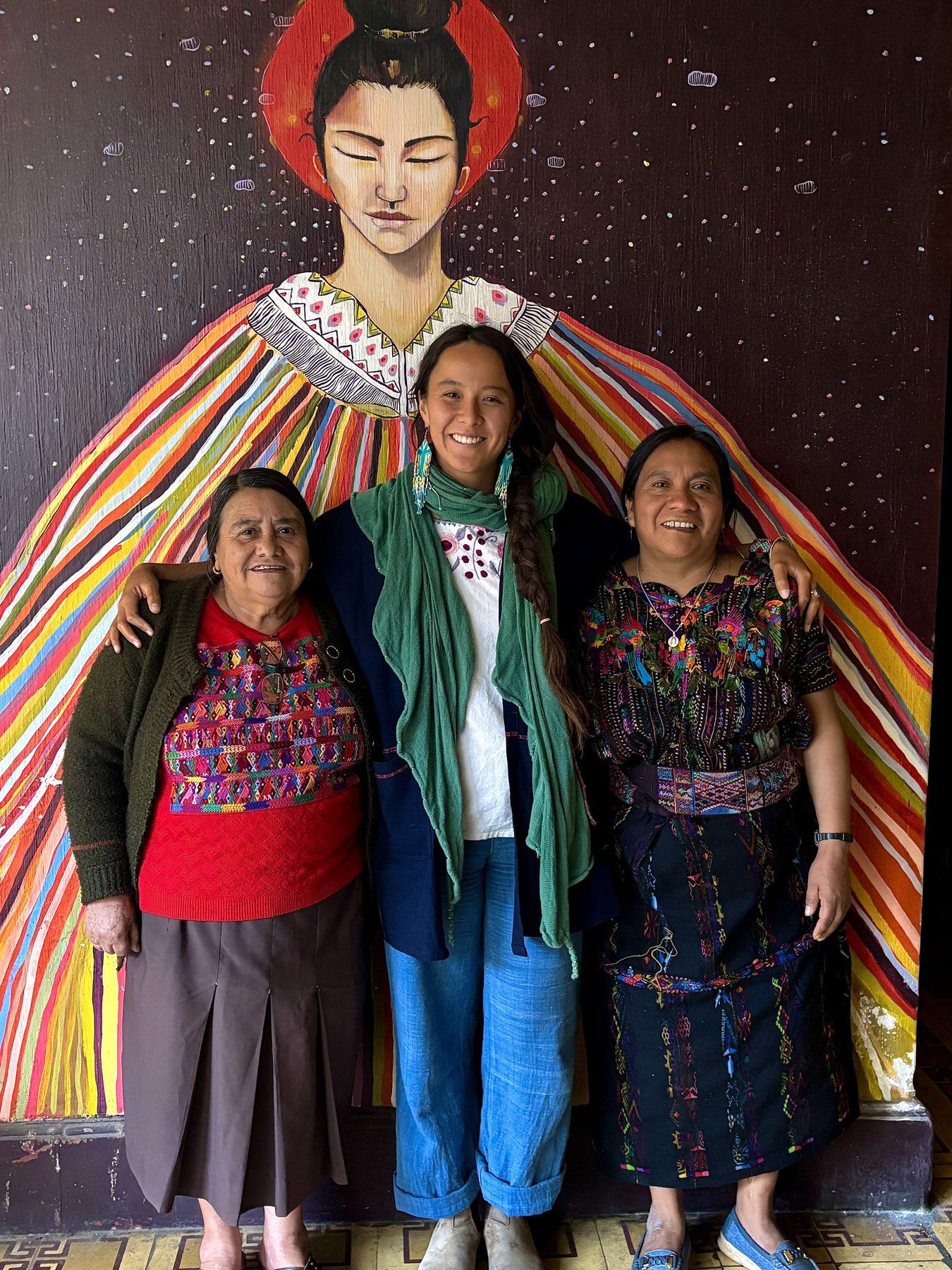
cotton by hand. From Oralia and Amparo in Guatemala, the strength
it takes to build something that lasts. These women have been my
teachers.
Still becoming
I want to be honest about where I stand. I came to this not as a
businesswoman but as a woman, a weaver, and a traveler. I am new
to much of this, and I have learned, and changed my mind, and
grown as I have gone. The collections themselves carry the marks
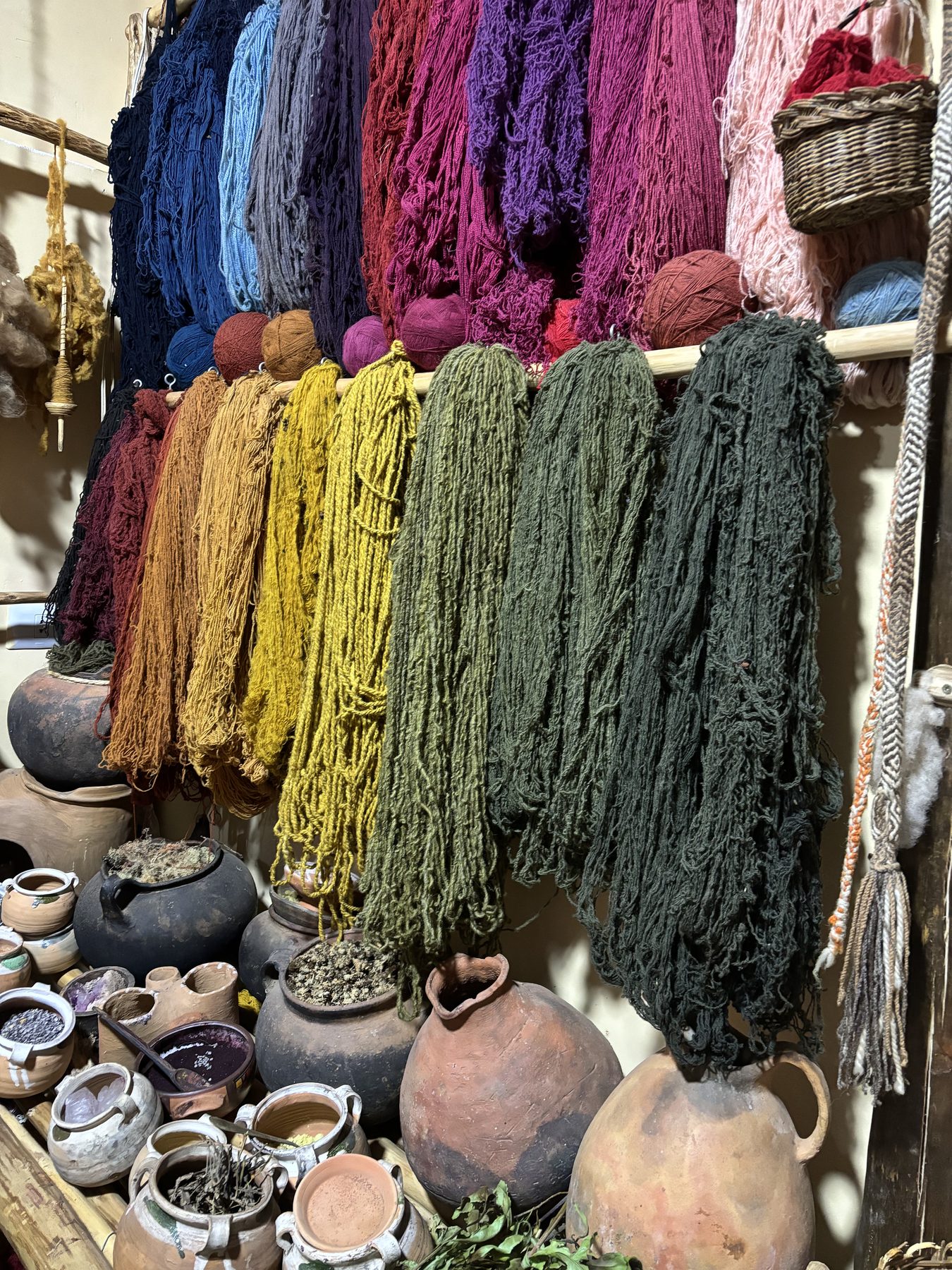
of that journey: my understanding of fibers, of dyeing, of what
it means to work well with a community, has deepened with each
one. I do not think this is a weakness. Like the women I work
with, and like the cloth itself, I am still becoming.
What weaving has given me
Weaving has changed my life in every way. It gave me a sense of
purpose and a direction, and it opened me to so much, inside
myself and beyond myself. Following this thread brought me back
to the essence of life, and to womanhood. It is how I have come
to understand who I am, where I come from, and how everything
is, in the end, connected.
A bridge, not the center
One last thing. MamaQuilla is not about me. I am a bridge, and
the brand is built around the communities and the textiles, not
around my image. That is why this is the only part of the site
that speaks in my voice. Everywhere else, the story belongs to
the women whose hands make the work.
If you would like to follow my own path more closely, my travels,
my weaving practice, and the honest stories behind the brand, you
are welcome to.
Living and weaving beside Norberta and her family in Chinchero, I
came to understand, through my own hands, how much a single
handwoven piece asks of the woman who makes it: the hours, the
skill, the patience, and the physical effort it demands of the
body. A single piece can take weeks. A larger or more intricate
one, months.
In the markets of Cusco, and across Peru more widely, I saw
something that did not match. Textiles sold as handmade were
offered at prices no genuine handwoven piece could sustain. A
great deal of what is presented as artisan craft in tourist
markets is, in truth, industrially produced and sold under the
appearance of authenticity.
This imitation erodes the value of genuine craft, until even the
most accomplished weavers struggle to sustain their work.
Norberta is a master weaver, recognized within her community and
beyond it. Yet to provide for her children and grandchildren, she
keeps factory-made pieces at the front of her shop, because
those are the pieces that sell, while her own work, which
carries generations of knowledge, remains in the back. This is
not a failing on her part. It is the condition that fast fashion
has produced, in which time is no longer valued and quantity has
displaced quality.
MamaQuilla was born of this recognition, and of the decision
that followed. Growing up in Switzerland gave me access that
these women were never given: education, mobility, the freedom
to move between worlds. I have come to see that privilege as a
responsibility. I could not change the market as a whole, but I
could place my access in the service of others. My role is not
to speak on behalf of these women, but to stand beside them as a
bridge, so that their work is seen, understood, and fairly paid.
Weaving is among the oldest forms of knowledge we hold,
practiced across the world in ways that still carry mystery. A
single thread runs through all of it, and through all of us.
MamaQuilla exists to keep that thread from being lost to
sameness.
For this reason, MamaQuilla is also a place of learning.
Alongside the textiles and their stories, we share what we have
come to understand about the fashion industry and the
preservation of indigenous craft and culture. And these
questions, once you follow them, open onto larger ones: about
life and womanhood, about capitalism and the systems we live
inside, about sustainability, truth, and coherence between what
we believe and how we live. A single thread, pulled gently,
leads to all of it. Our purpose is not only to offer beautiful
pieces, but to encourage a return to less, and to the worth of
quality over quantity.
Where we are going
We hope to nurture an interconnected network of textile artisans,
centered on women and welcoming all, where ancestral knowledge
meets contemporary life with dignity. A world where traditional
weaving is not disappearing but evolving, where artisans are
fairly paid and respected as cultural carriers, and where buying
a textile becomes an act of relationship rather than consumption.
The story does not belong to one person. It belongs to every pair of hands that keeps it alive.