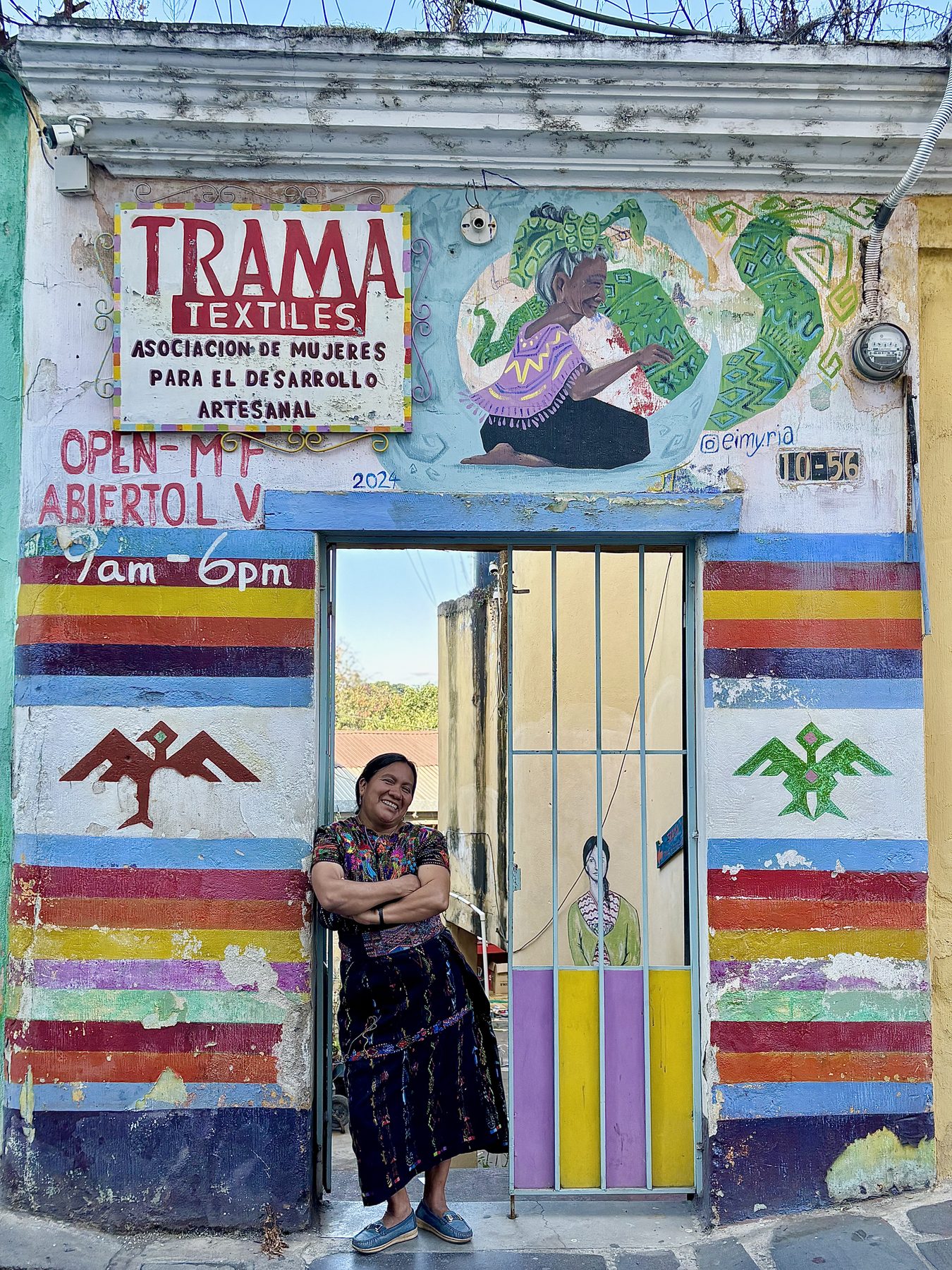
Quetzaltenango (Xela) · Guatemala
Woven by many hands, in the highlands of Guatemala.
Ixoq comes from Quetzaltenango, the city most people call Xela, in the Western Highlands of Guatemala. It was made with Trama Textiles, a cooperative of Maya women whose story began in the aftermath of war. What follows is the story of that place, the women who built it, and why their work stayed with us.
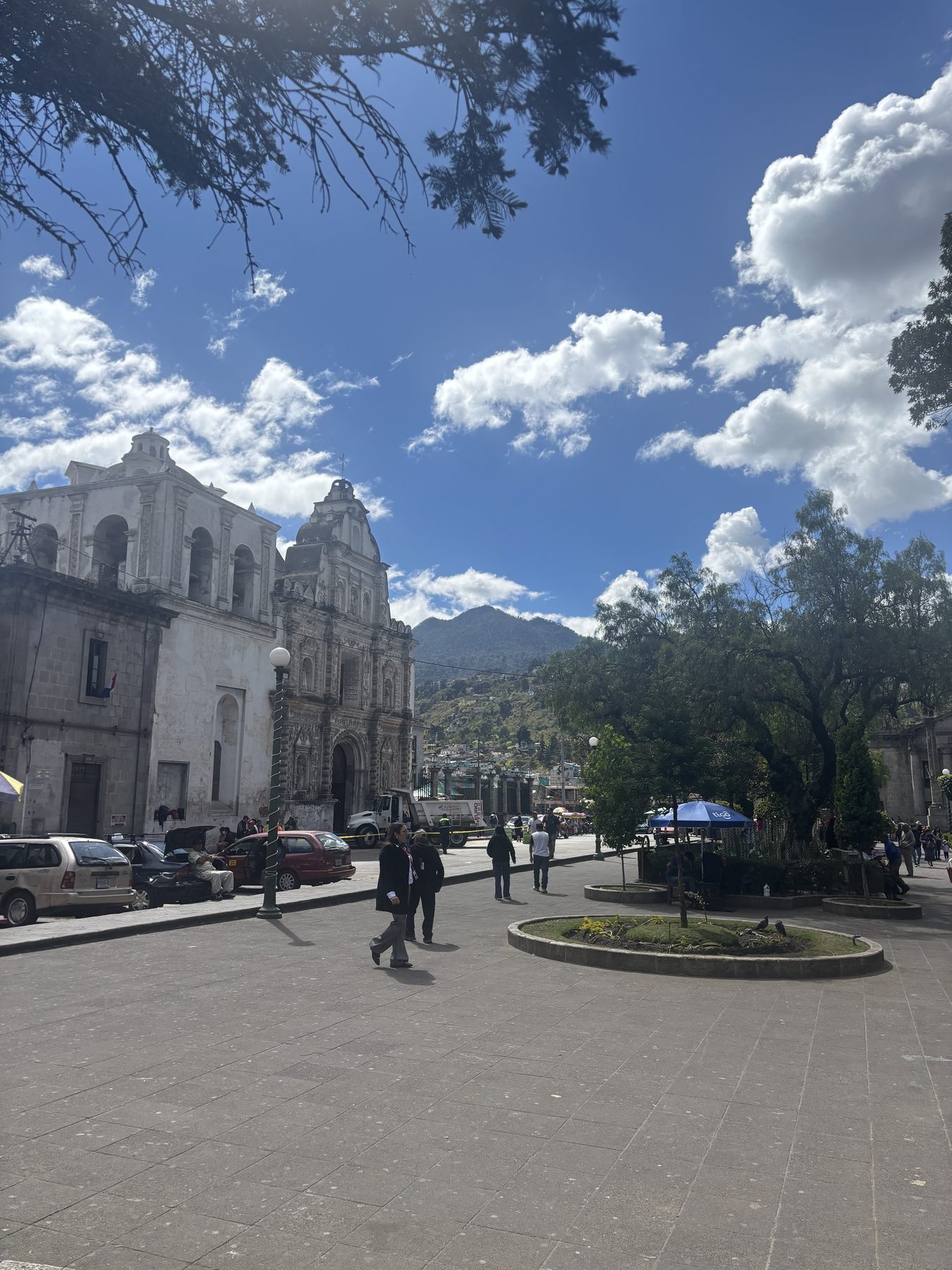 Quetzaltenango · Xela
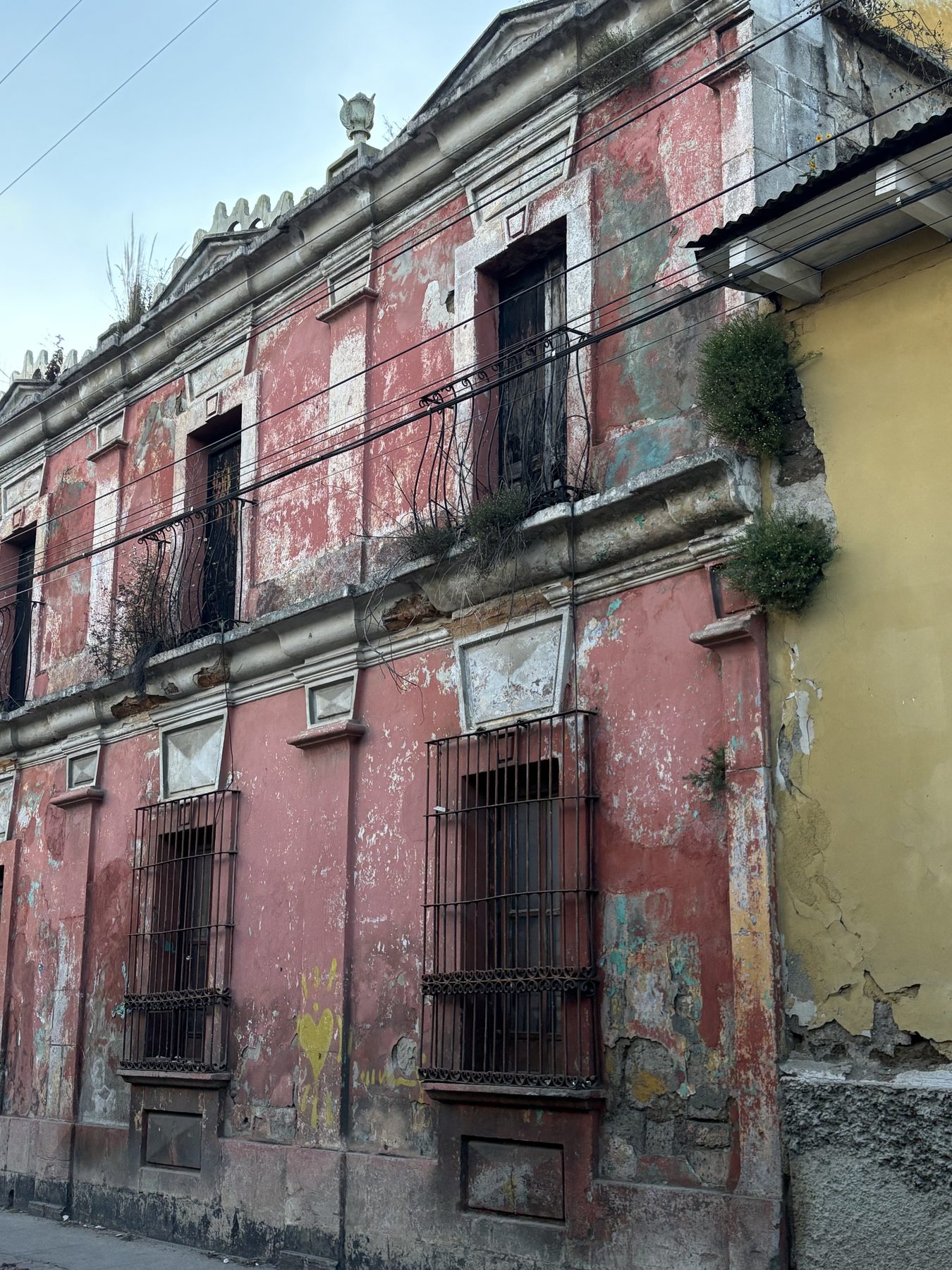
Quetzaltenango, known as Xela, is the second city of Guatemala, set in the Western Highlands among volcanoes and forest. It is known as one of the finest places in Latin America to learn Spanish, which draws a particular kind of traveler: intentional, often staying for weeks or months, there to learn the language and the culture rather than to pass through. The city has not been overtaken by tourism, and that balance gives it a quiet, dedicated feeling. Its center is full of old colonial buildings, colorful and strongly European in influence, so that walking through Xela can feel like being carried into another time and another country. The streets hold a mix of Guatemalans in modern dress, others in their traditional Indigenous clothing, and a handful of travelers.
It was in November that Cat-Vi came to Xela, drawn by a name she kept hearing as she researched the weavers of Guatemala: Trama Textiles. She stayed two weeks, in one of the cooperative's rooms for volunteers.
 Trama Textiles · since 1988
Trama Textiles was founded in 1988, in the aftermath of Guatemala's internal armed conflict, a war of more than thirty-six years that fell hardest on Indigenous Maya communities. So many men had been killed that countless women were left widowed, carrying their children and their grief alone. Two of them, Oralia and Amparo, brought weavers together from many regions so that they could sell their work, earn a living, and hold on to their dignity and their traditions through the one knowledge that was theirs.
More than thirty-five years later, the cooperative is still alive. Today it is worker-owned and supports over a hundred and fifty Maya women across many communities of the Western Highlands. Cat-Vi spent her two weeks among the weavers, the volunteers, and the founders, watching how it all worked, and was moved by the dedication she found there.
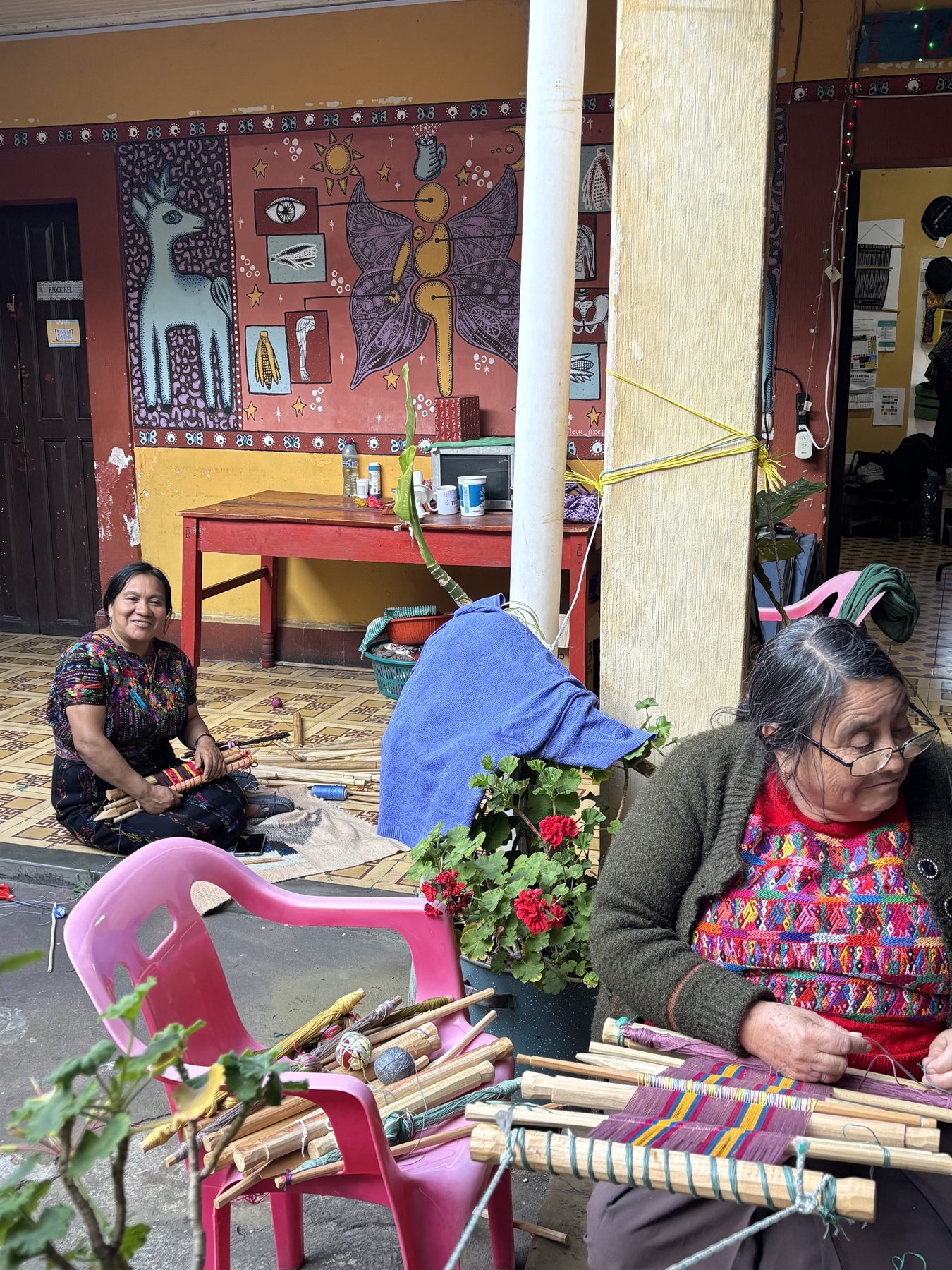 Inside the cooperative
From a distance, many Guatemalan cooperatives present a polished face, fine websites and catalogs. Cat-Vi wanted to see the reality behind that, and at Trama she found something real. The space is alive with photographs and paintings, full of stories and movement. Oralia and Amparo carry themselves with the pride of women who have built something that lasts, and you can see it in their eyes.
They are professional and devoted, and they are also deeply human. There is warmth in the way they relate to everyone around them, a constant care for how people are doing, and a great deal of laughter. Between the two founders there is a long friendship and a deep mutual respect, the ease of people who have known each other for a very long time. They complement each other, and they are a team.
It is honest, too, to say what cooperatives like this carry. The founders are often exhausted. Much of their income comes from teaching weaving to the visitors who pass through, work they love and find purpose in, but work that is constant. The weight they hold is real: the number of women who need support is far greater than two people can ever meet. What places like Trama most often lack is not goodwill or volunteers, but funding. This is part of why buying from them matters.
The women of Trama weave on the backstrap loom, the technique passed down through generations of Maya women. The textiles are colorful and intricate, the work of many hands across many communities. They also give old textiles new life, recycling cloth into more contemporary pieces.
For now, little of the work is plant-dyed; natural dyeing is costly and time-intensive, and in Guatemala it has become less common than elsewhere. Cat-Vi spoke with the founders about it, and there is a shared hope that, in time, more of this ancestral practice will return.
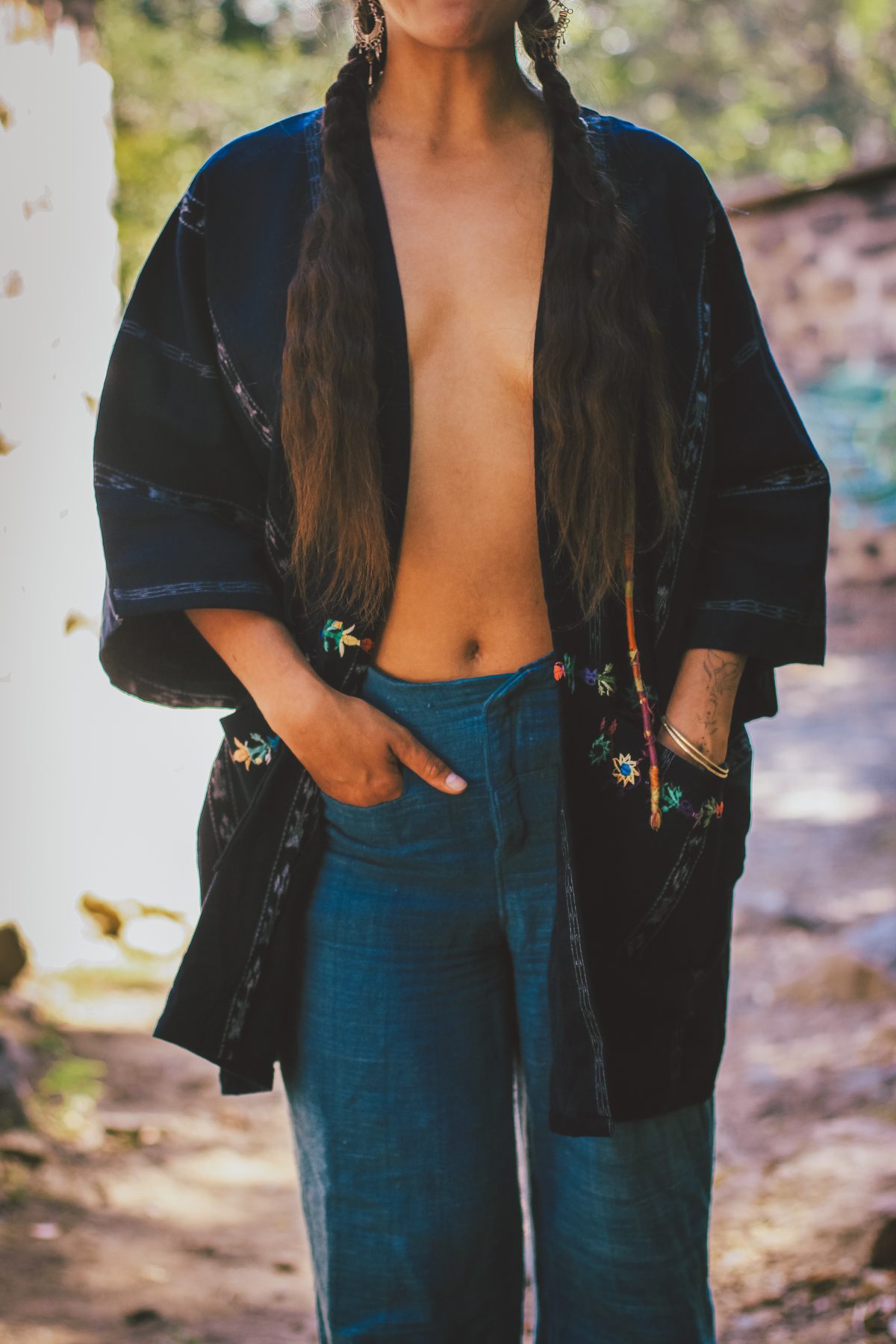 Backstrap-woven · Ixoq
Cat-Vi did not co-create here. Trama has a beautiful shop, and she took her time choosing pieces to bring with her, buying as much as she could to support the cooperative. The pieces are backstrap-woven, colorful, and varied: scarves, shawls, bags and small pocketbooks, pillowcases, kimonos, agendas, and antique textiles woven across different regions over many years. Much of this collection has already sold.
Much of Ixoq has already sold. Sold pieces remain visible as Archive, so the collection still tells its story in full.
When you choose a piece from Ixoq, your support reaches Trama Textiles directly, the more than one hundred and fifty Maya women it stands behind, and the founders who have carried it for over thirty-five years. For a cooperative like this, a sale is the most useful support there is. To wear one of these pieces is to take part in a story of resistance and solidarity, woven by hands that have kept Maya culture alive through the hardest of times.
Ixoq means woman. We chose it because of how many women stand behind this collection: the more than a hundred and fifty weavers of Trama, the founders who built it from loss, and the generations of Maya women whose knowledge lives in every thread. The name belongs to all of them.
If you ever travel to Guatemala, go to Xela and visit Trama Textiles. Meet the women, learn to weave, and see this living place for yourself.
Textiles as vessels of story, memory, and relationship.
MamaQuilla grows slowly. Leave your email to receive word of new pieces, upcoming events, and the stories behind the collections.
We write rarely, and with care.